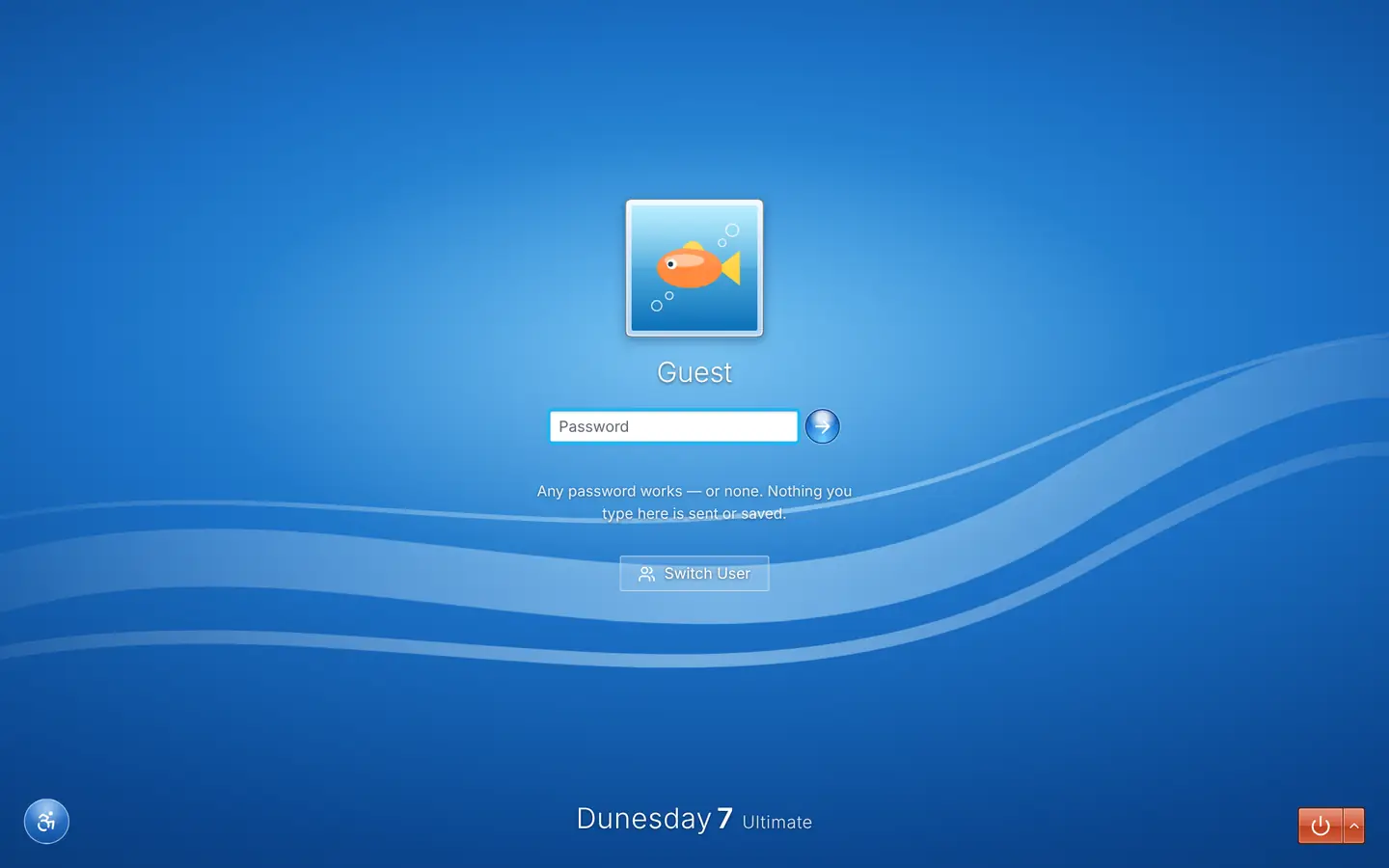
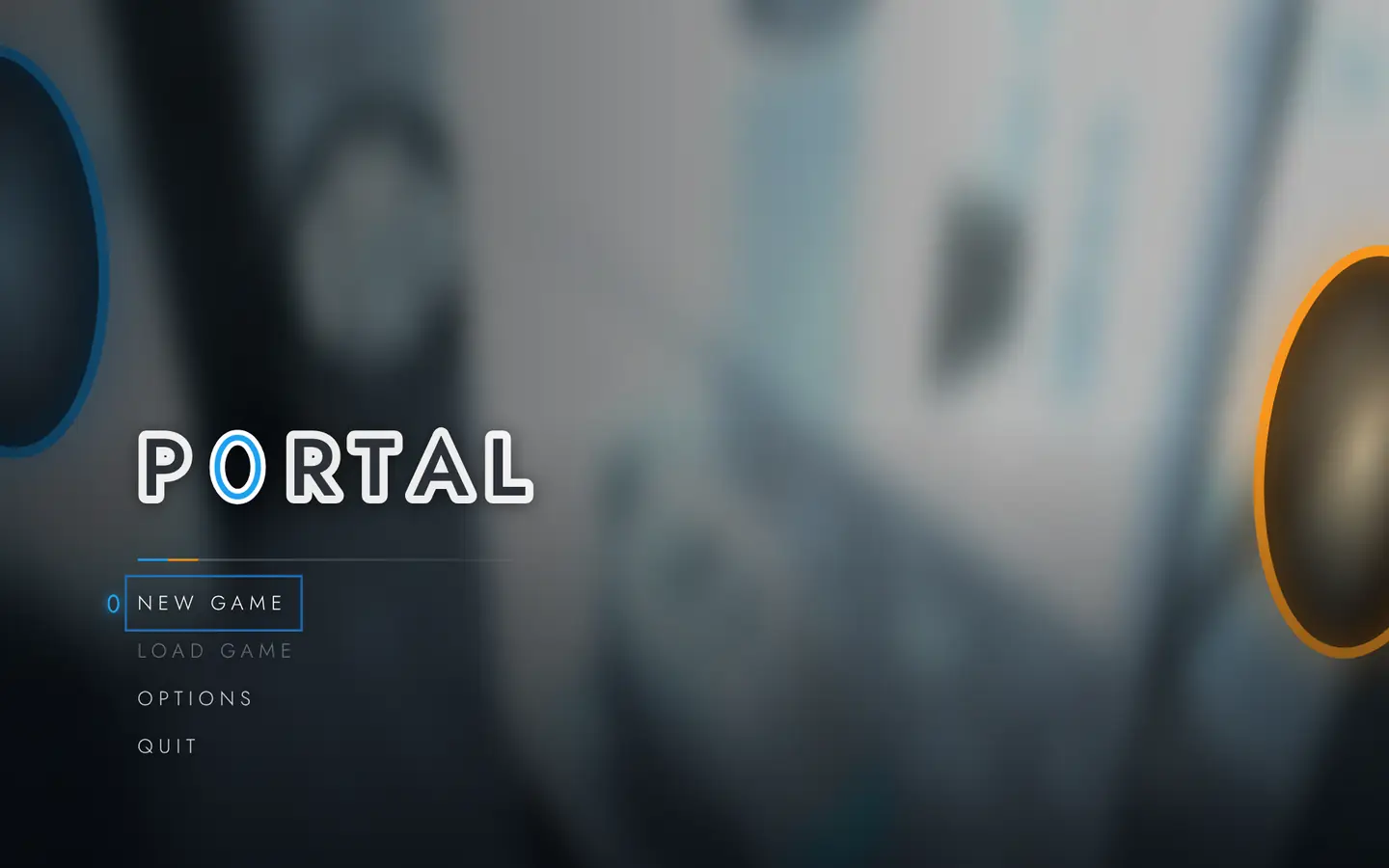
Every version of the homepage and feed, and each game and app as it arrived, from the first commit to today.
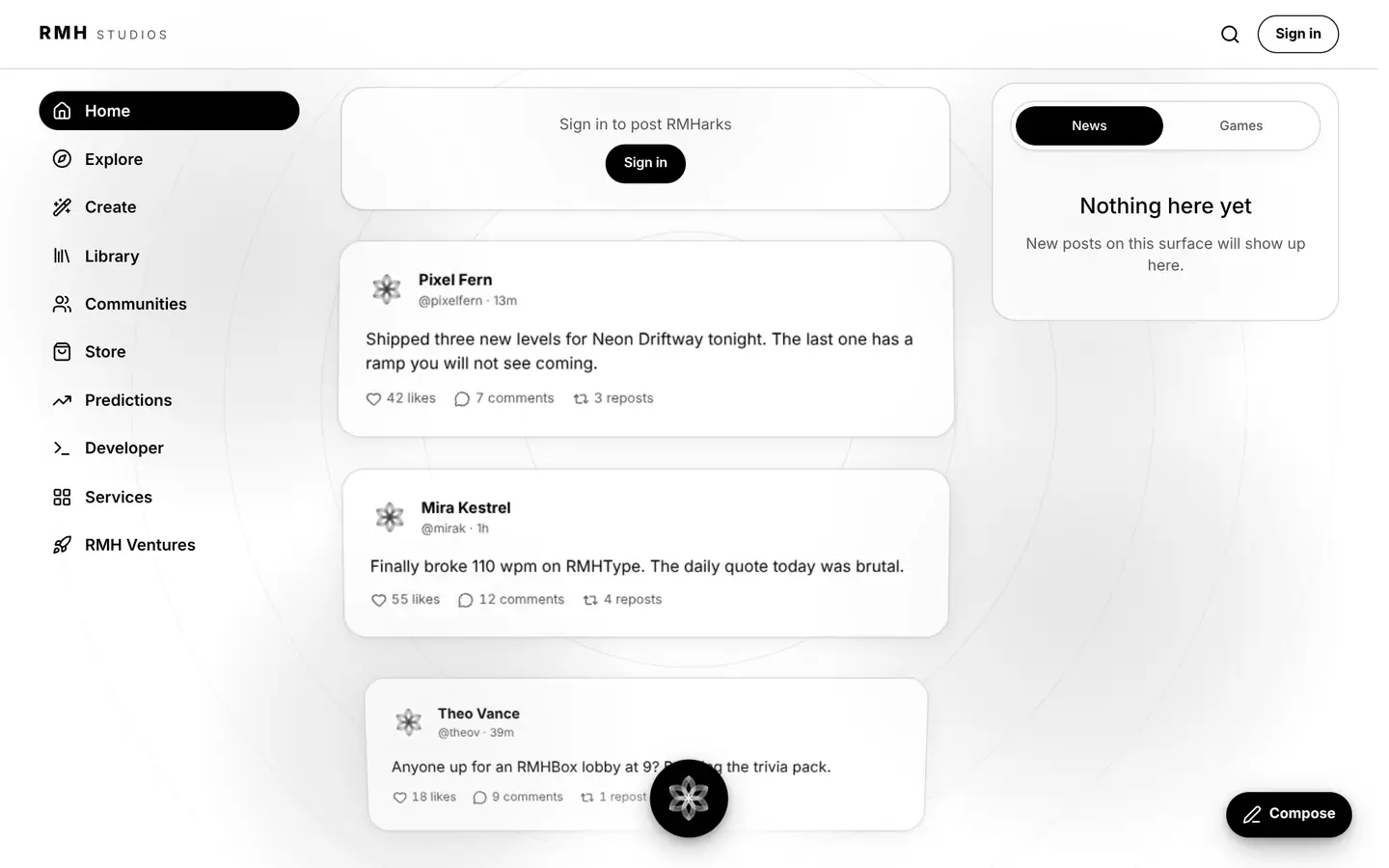
Pictures of the homepage were taken by building that commit and opening it signed out, with a few invented posts so the feed is not empty. Pictures of games and apps show them as they are today. Open today's page loads the page as it is now inside this one.
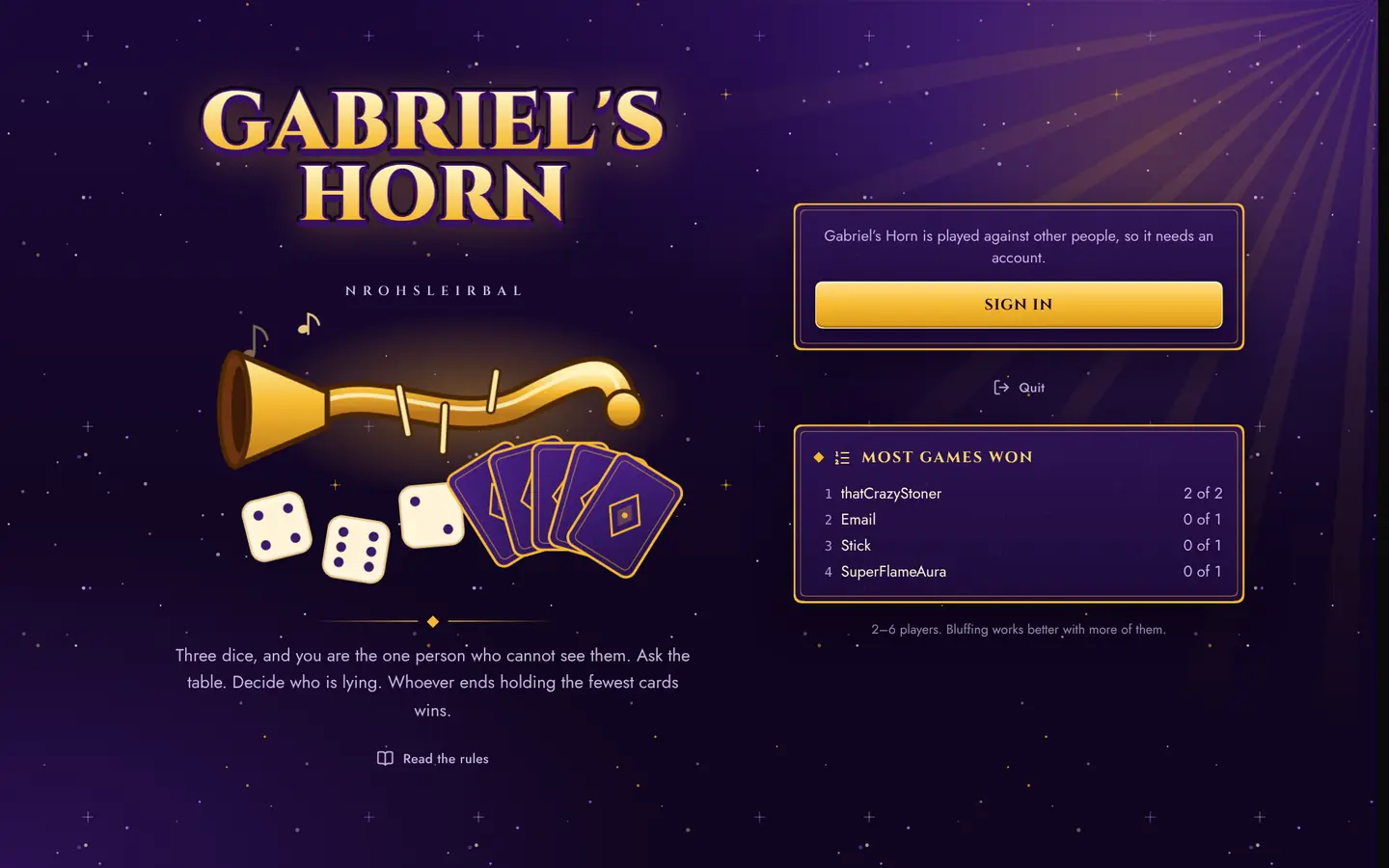
Open this version plays the old site or game itself: each was built from its commit and recorded while someone used it, and the recording plays back in your browser. What the recording never saw, such as signing in, posting or a multiplayer lobby, does nothing.
Latest changes
The release notes for the small changes: new features, fixes and improvements, newest first.
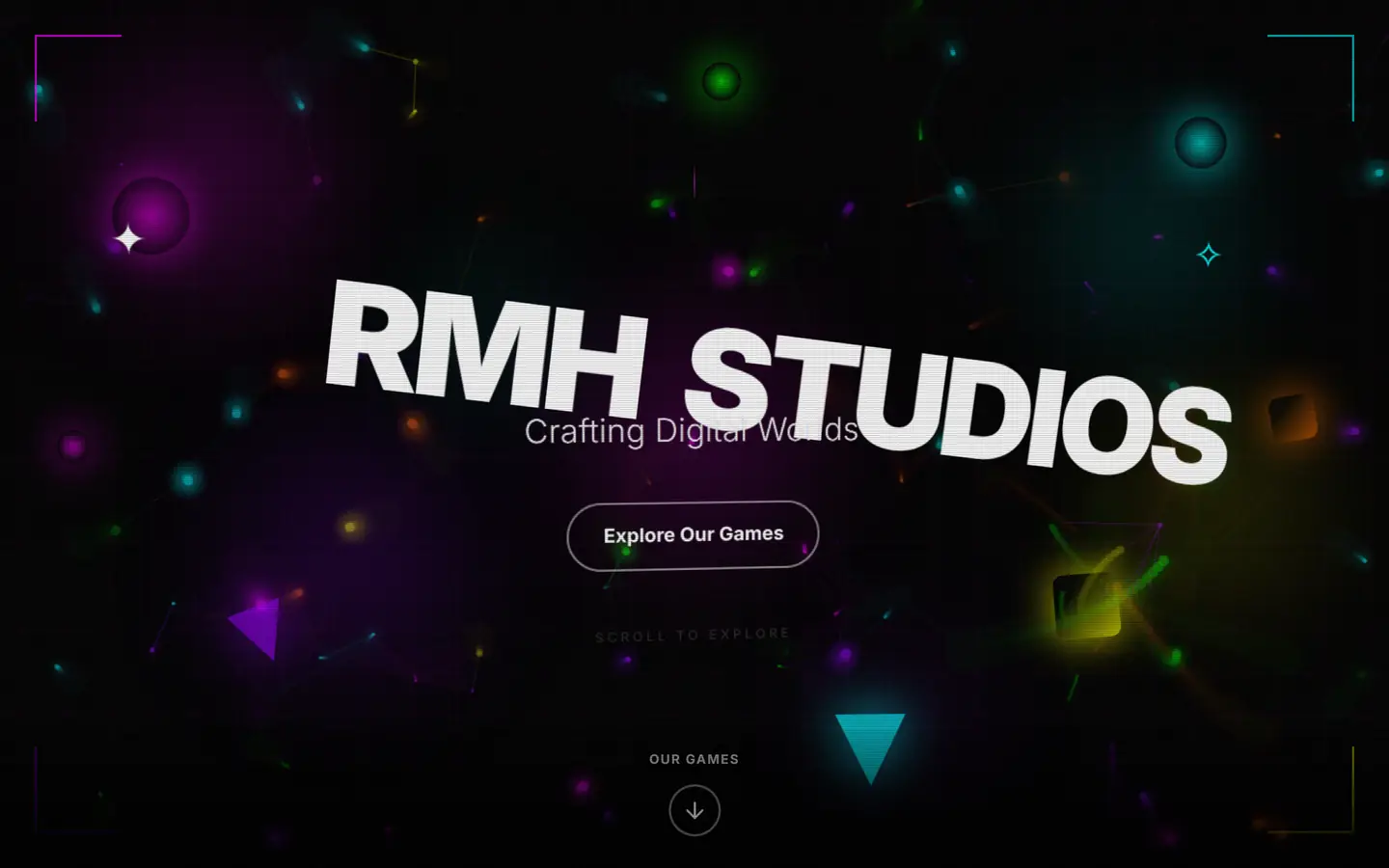
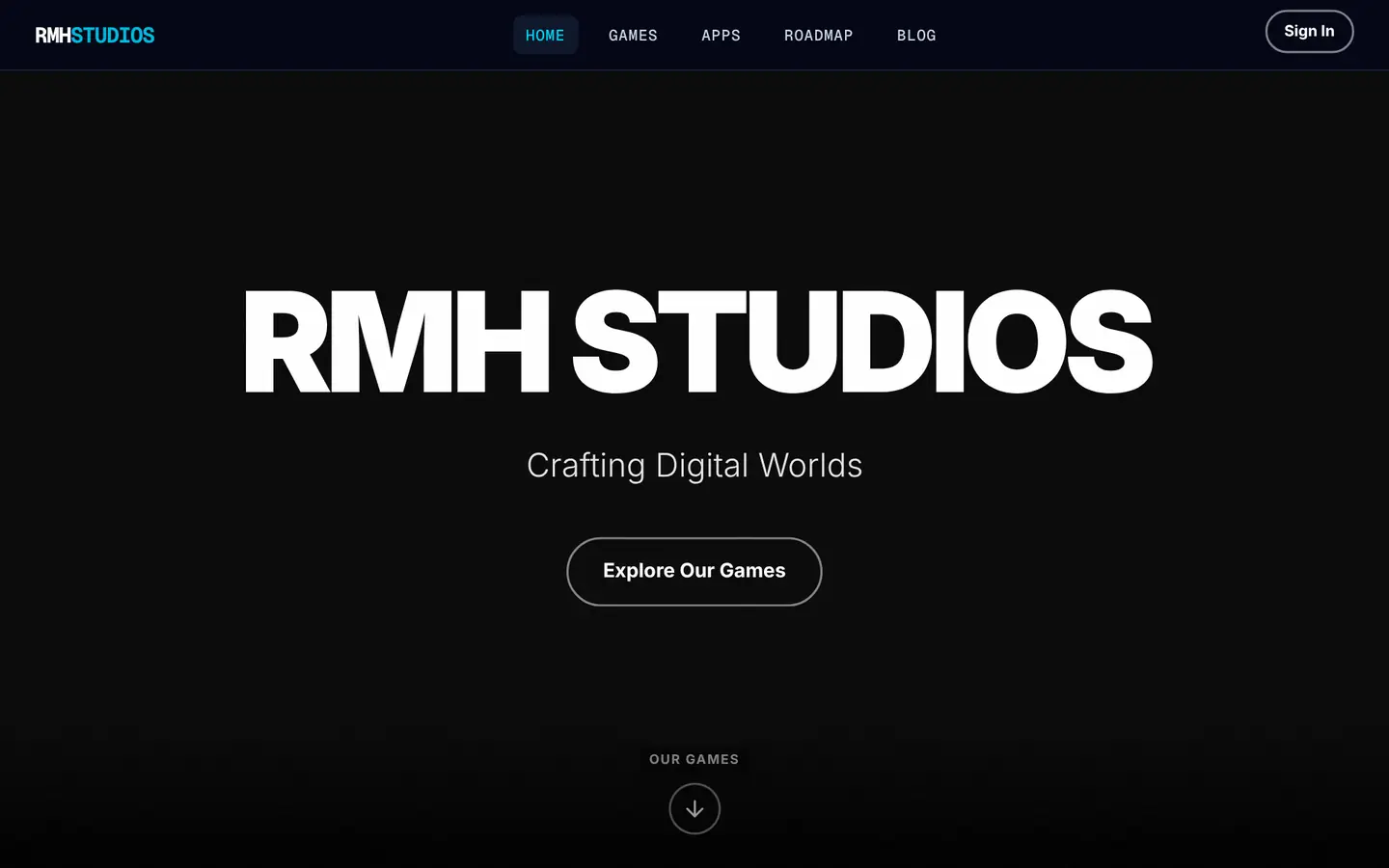
Two days after the first commit, rmhstudios.com was a Next.js landing page in a hyperpop theme: glowing colour blobs, particles, corner brackets and a large "RMH STUDIOS" over "Crafting Digital Worlds". Its sections were content, projects and merchandise.
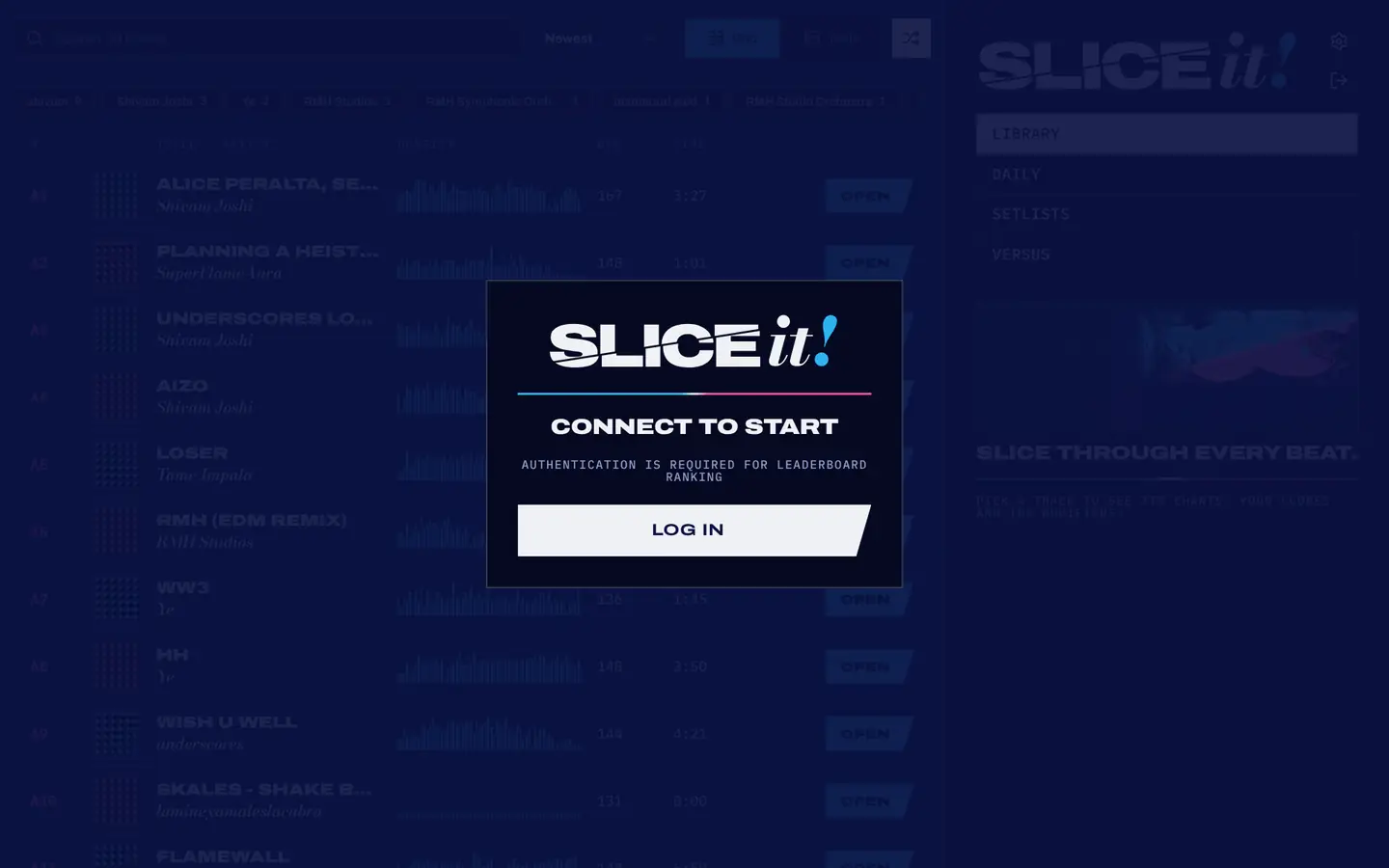
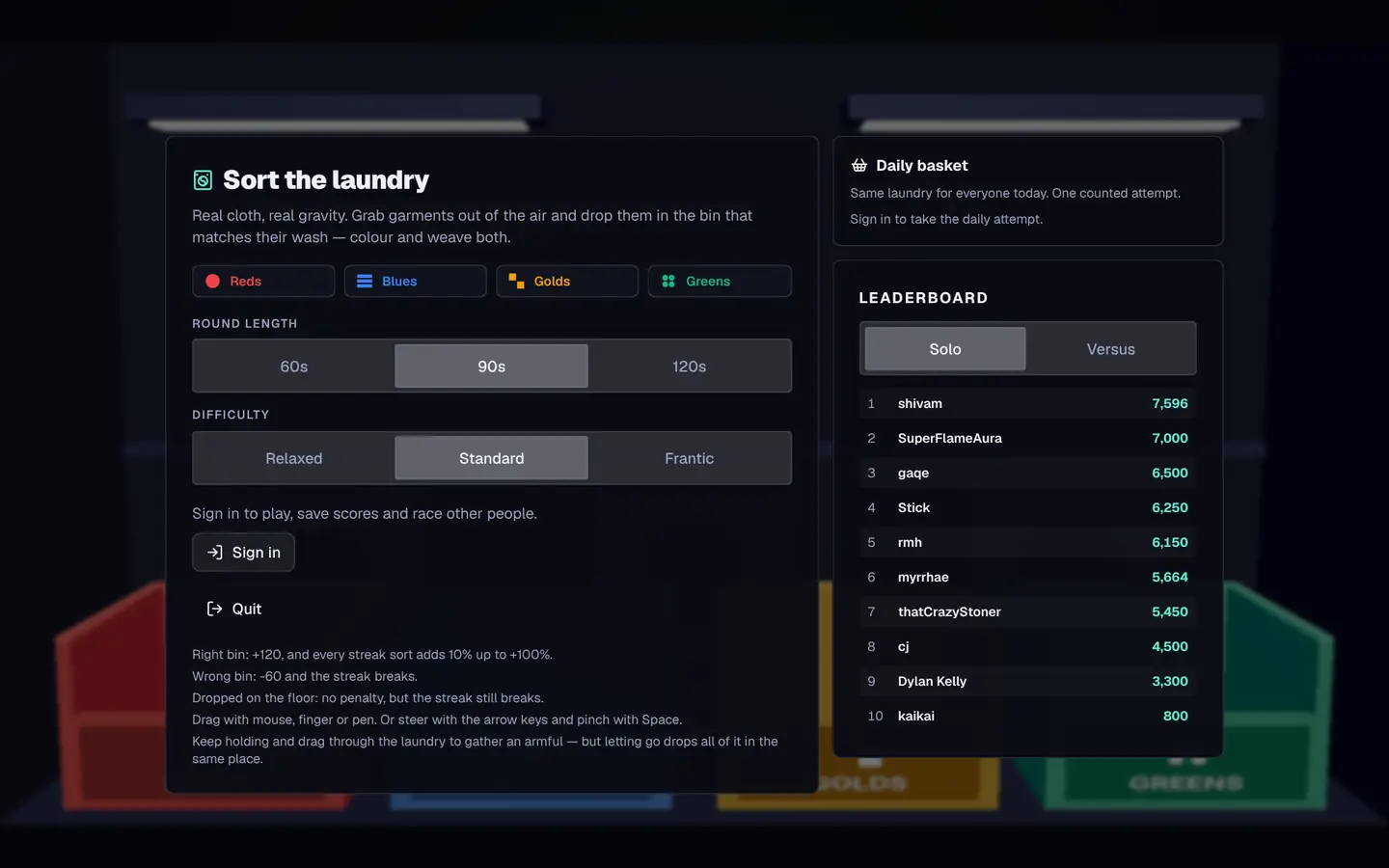
After a three-week gap the studio came back with a game. Slice It began as a rhythm game with a leaderboard, and the same day brought House Always Wins, Laundry Sort and an arcade page to hold them.
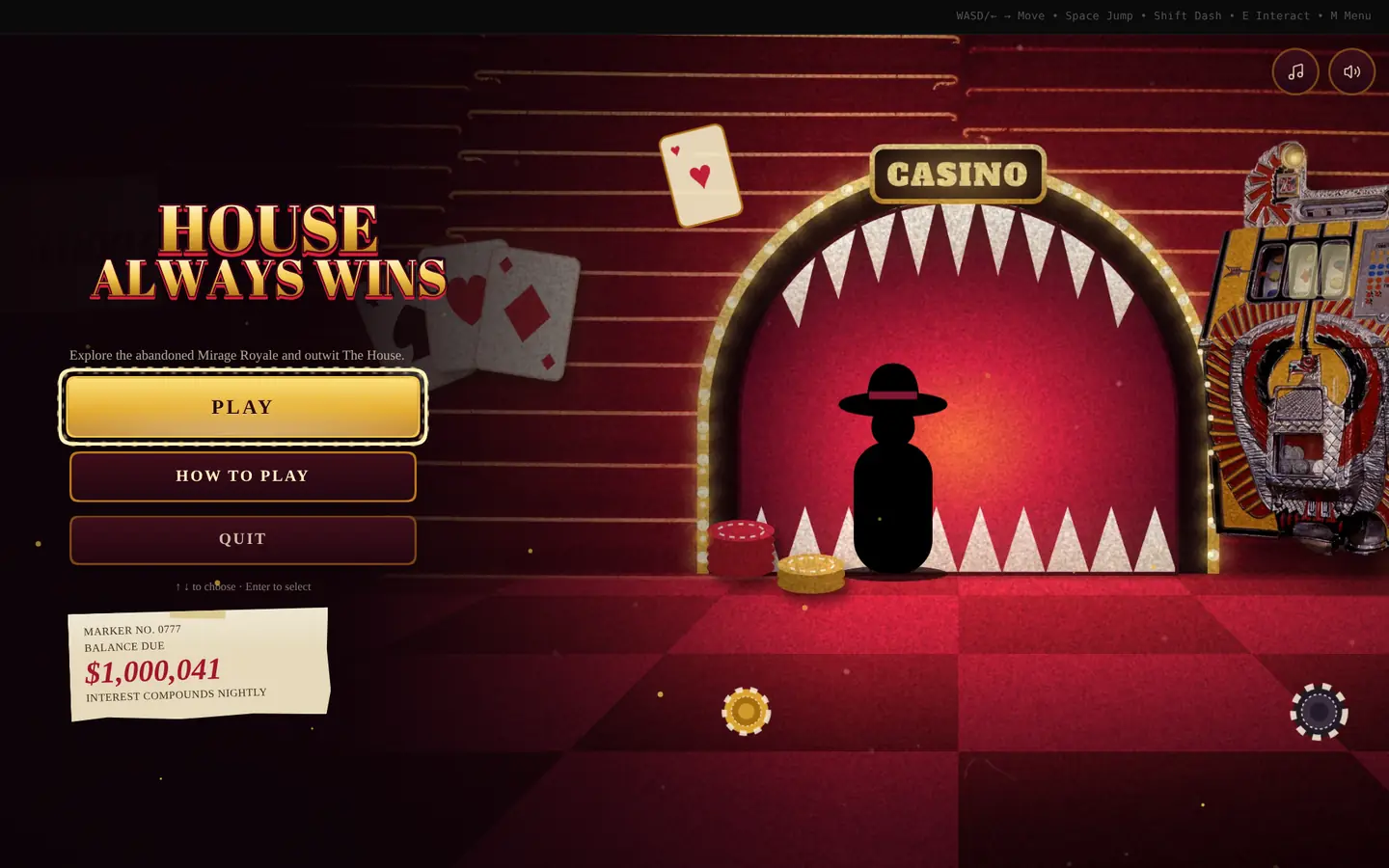
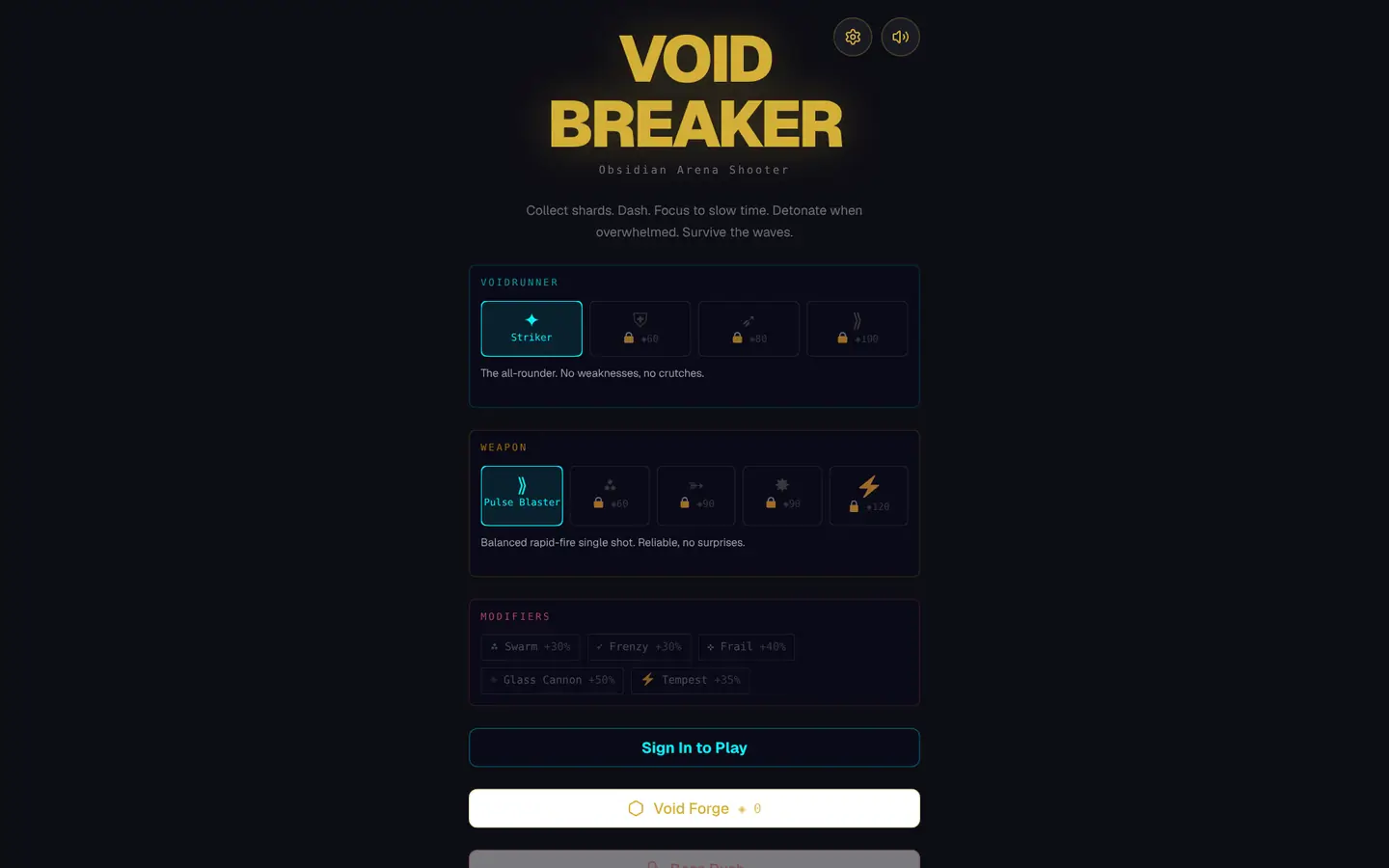
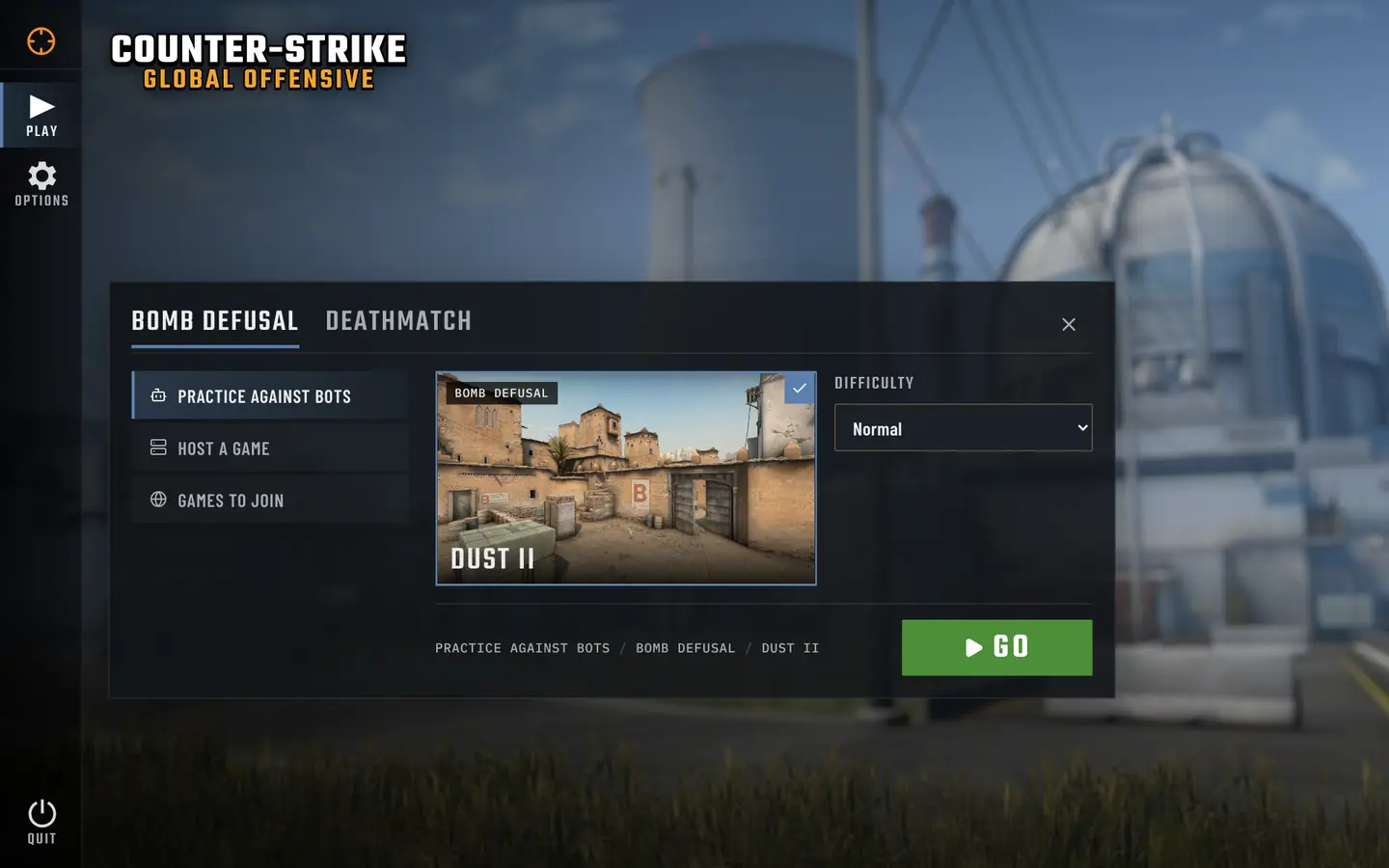
A dark casino metroidvania, drawn on a 2D canvas, with a lobby, a dealer, security, dialogue and a debt system. It was the first game with its own tile on the homepage.
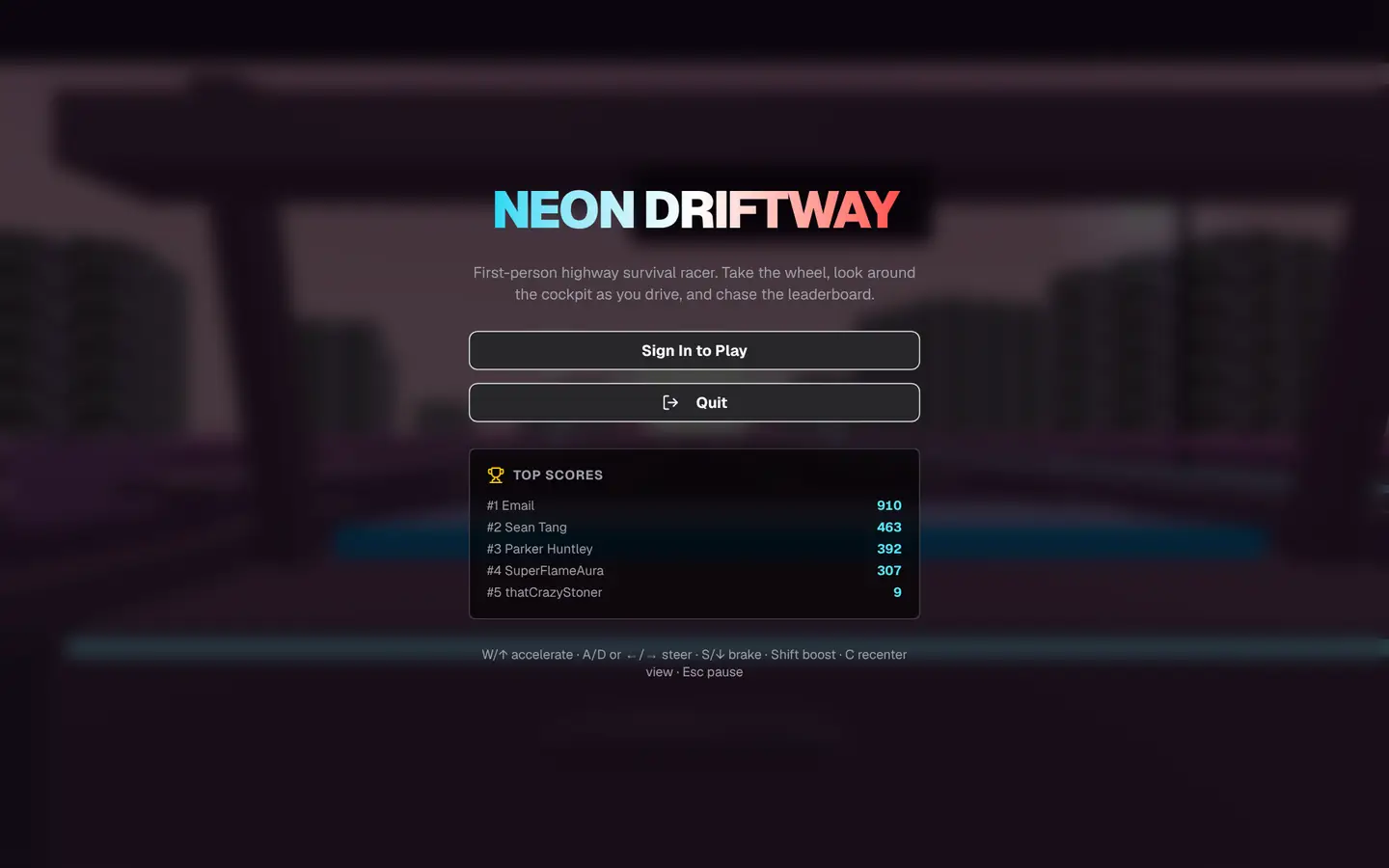
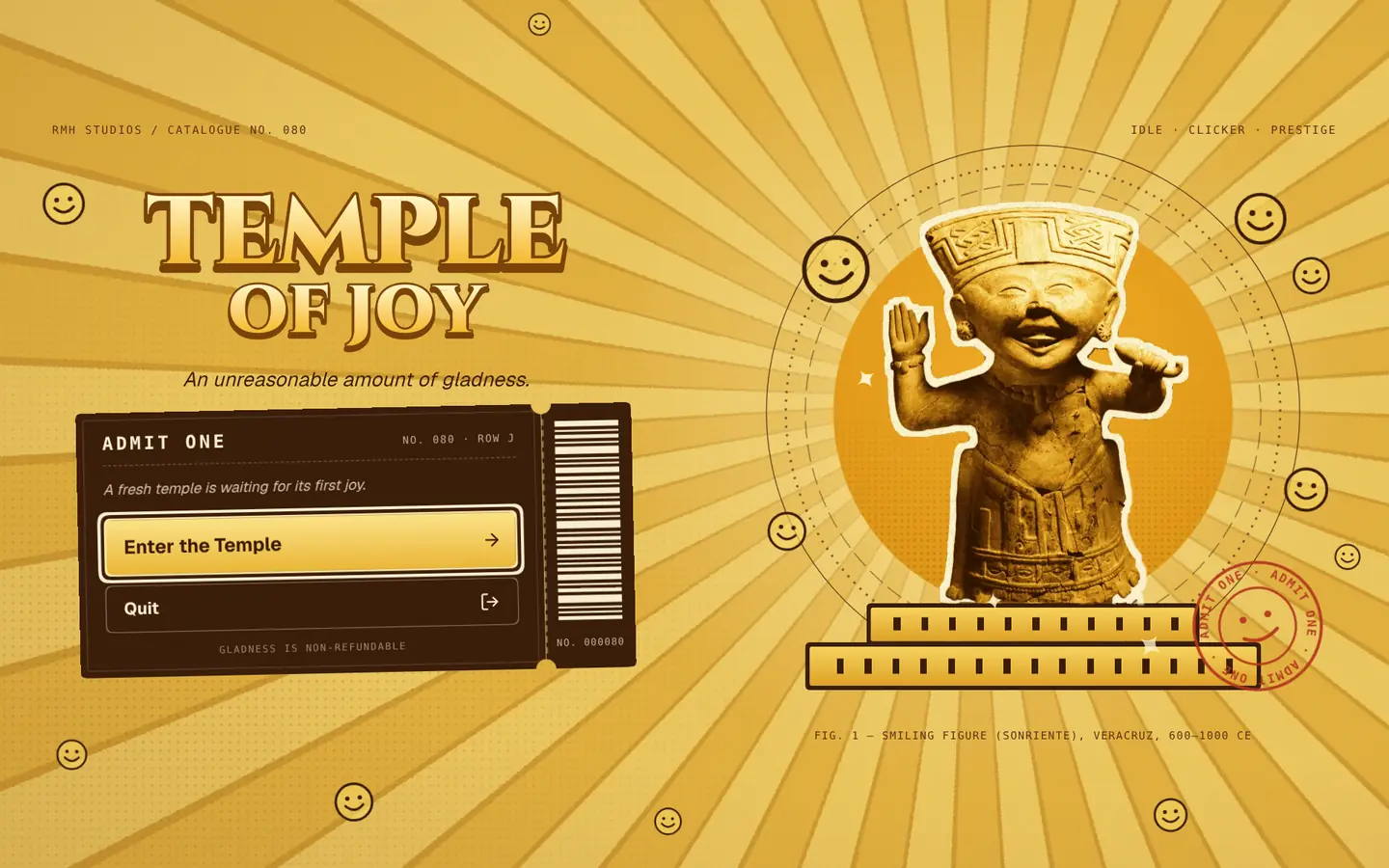
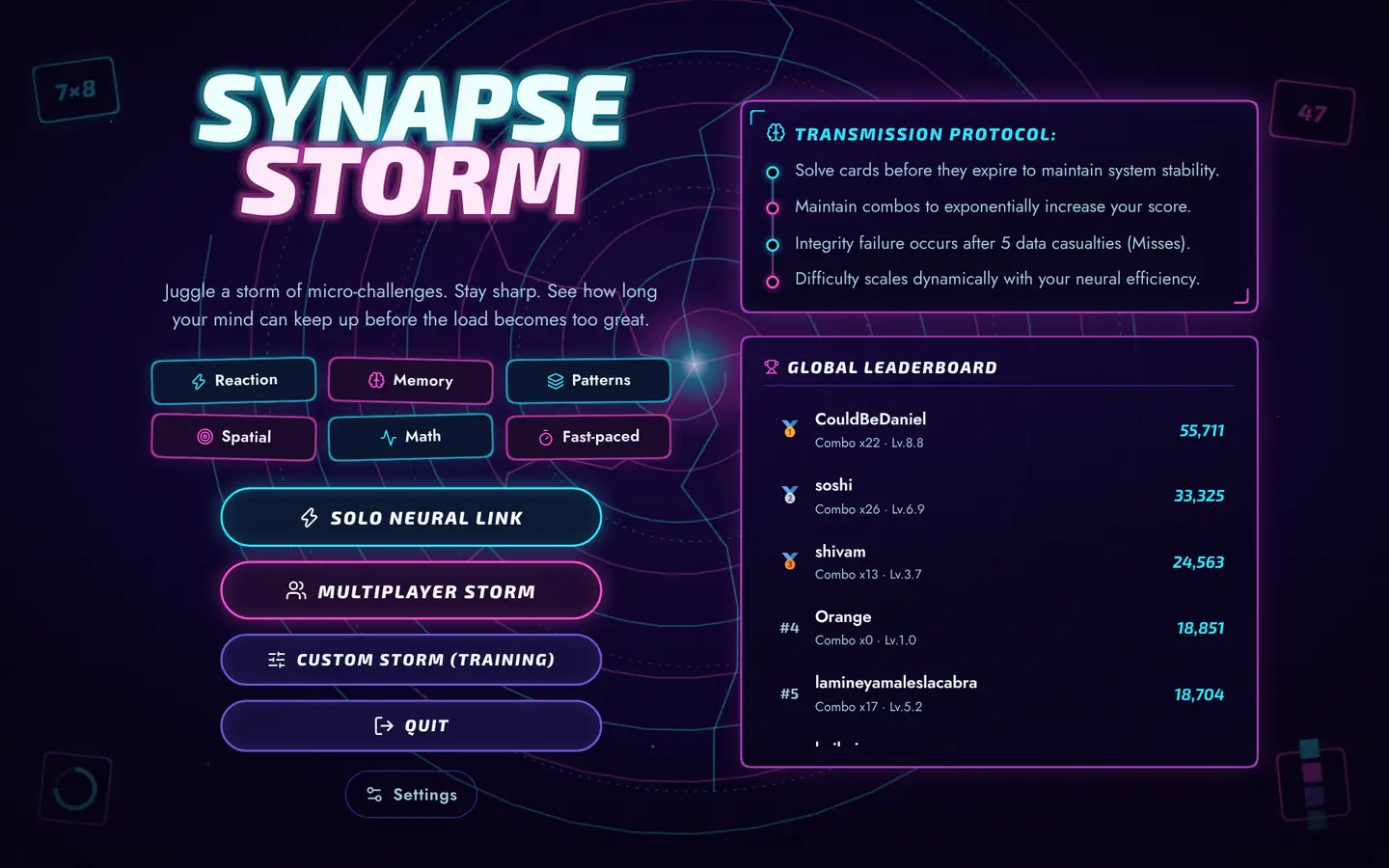
An idle game that started as a design document. It has grown events, achievements and a global multiplier, and in August a field of liquid globes you can buy.
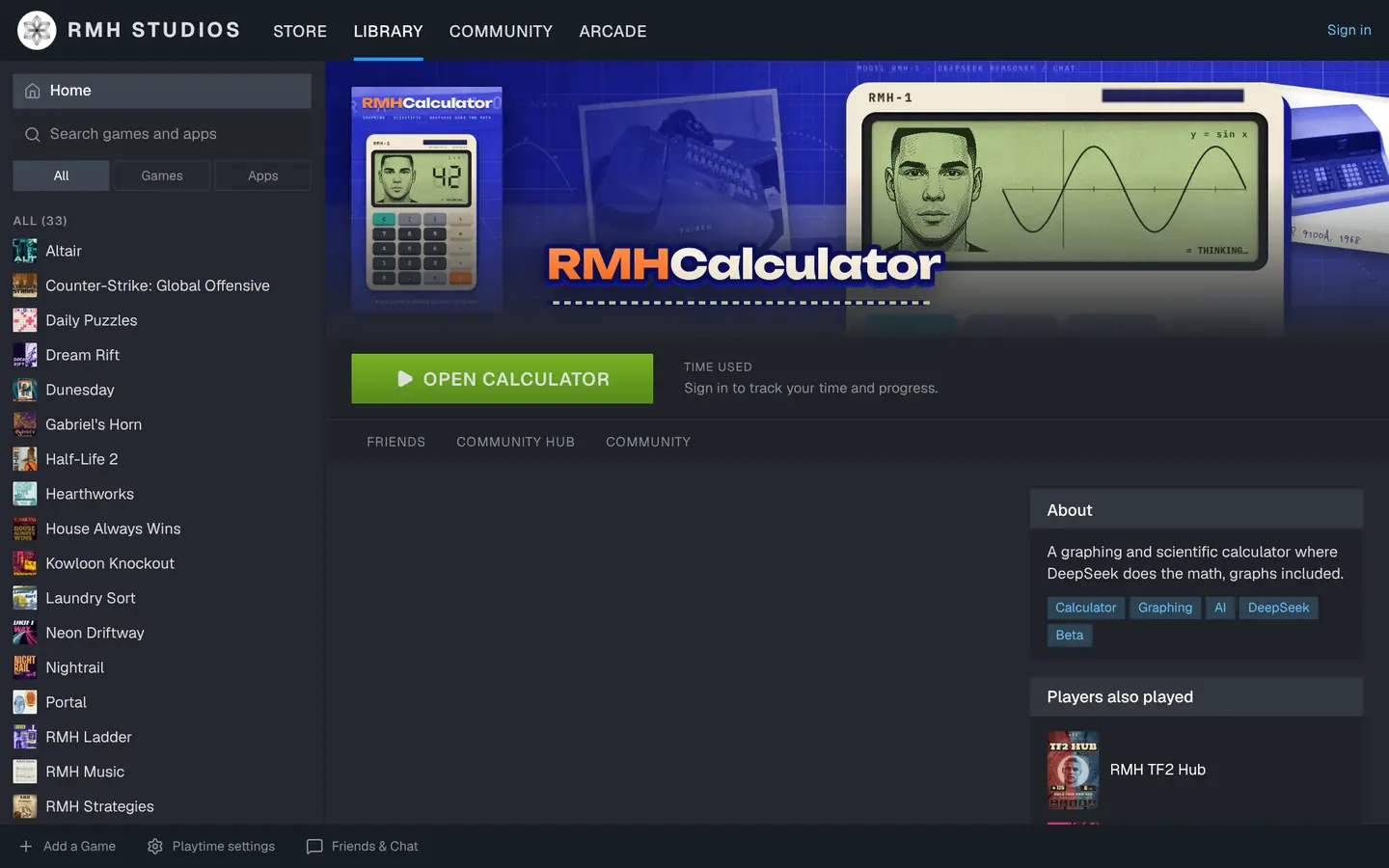
Games and apps got their own pages and a navigation bar across the top: Home, Games, Apps, Roadmap and Blog in monospace capitals on navy, with the active tab in cyan and an outlined Sign In.
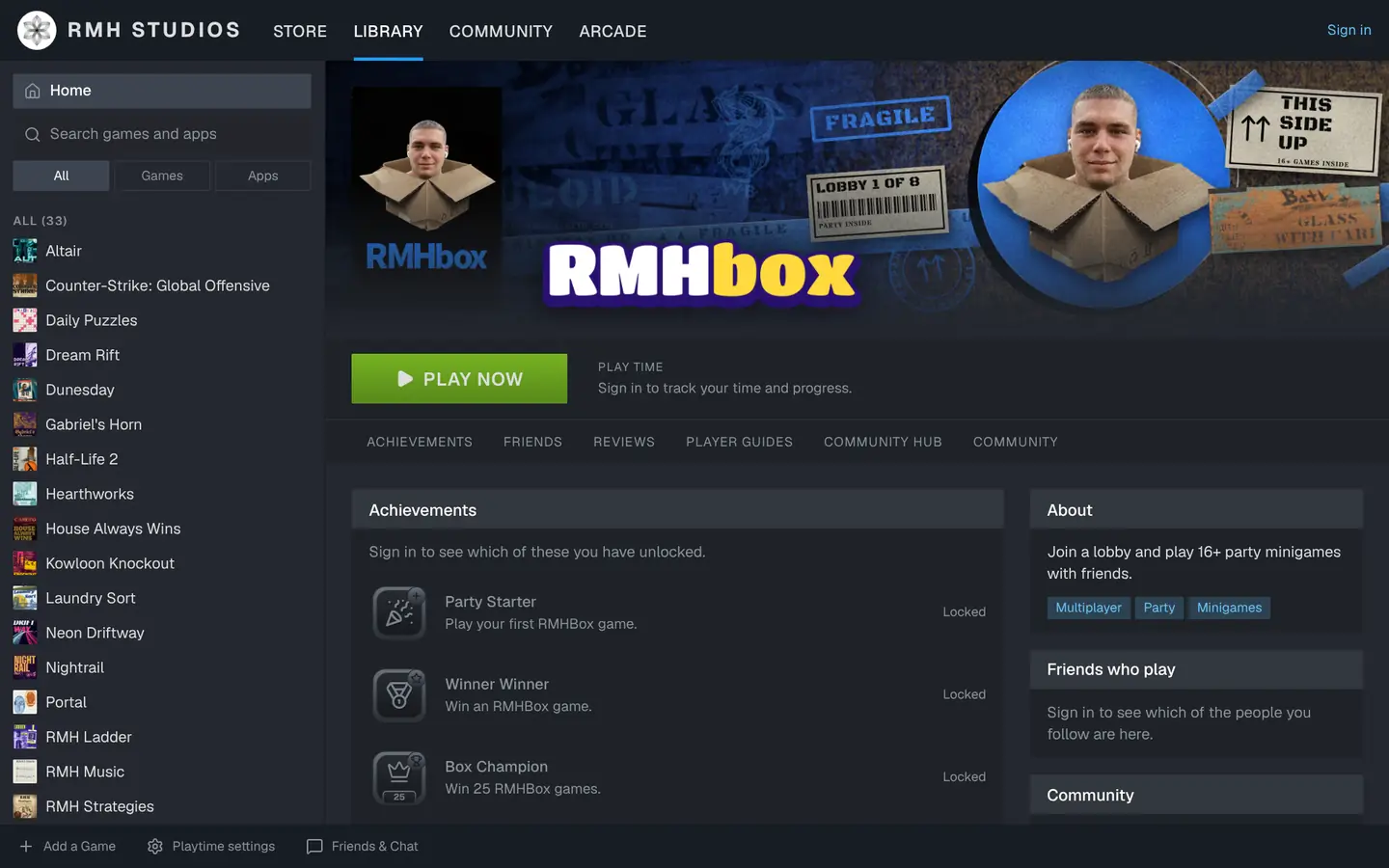
Phones as controllers, one shared screen and a rotating set of minigames. RMHBox became the most tested part of the site; its phase tests are still the mission-critical suite.
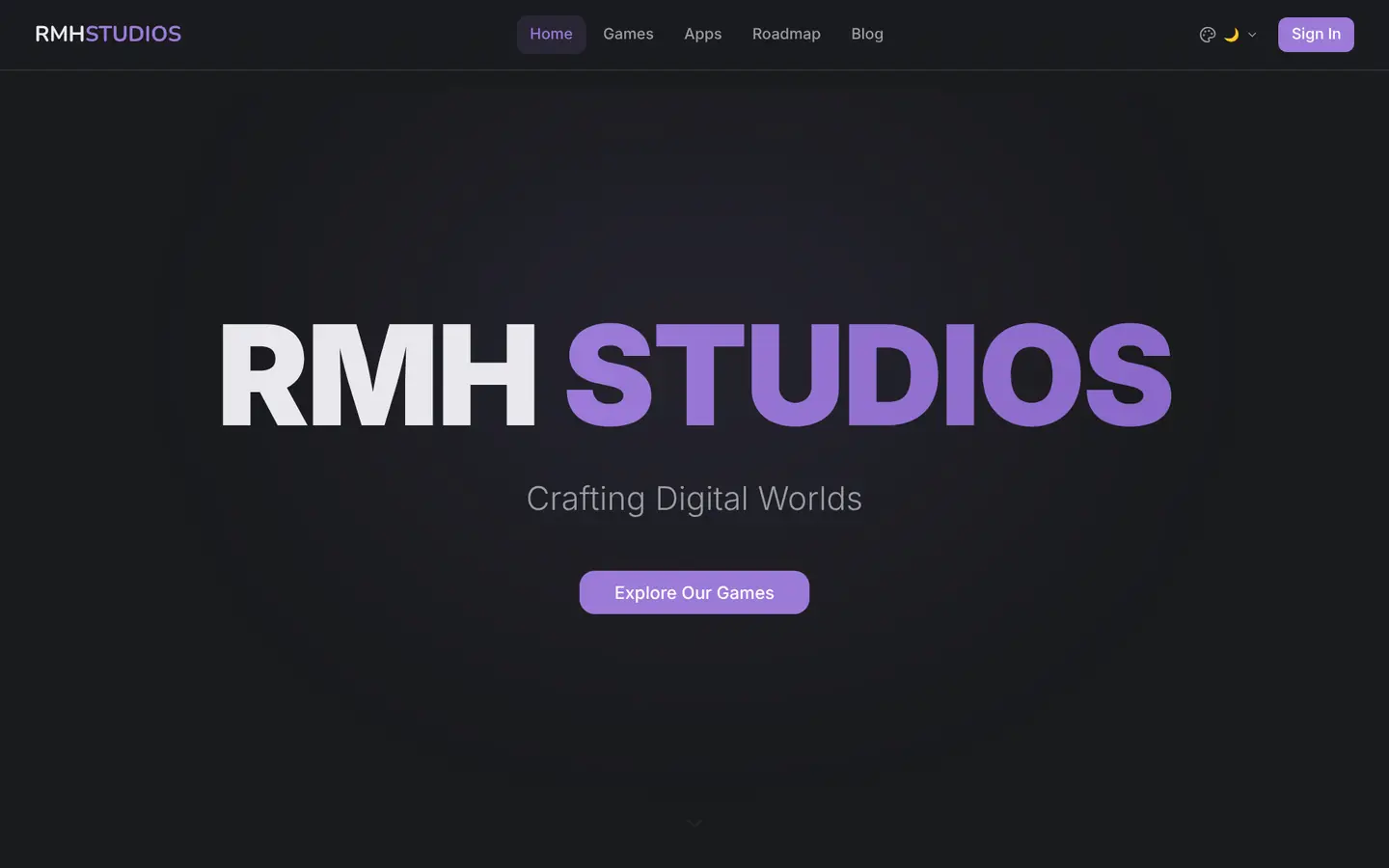
Three days later the same layout was recoloured: charcoal with a soft lavender accent, "RMH" in white and "STUDIOS" in purple, solid purple buttons, sentence-case navigation and a palette switcher in the header.
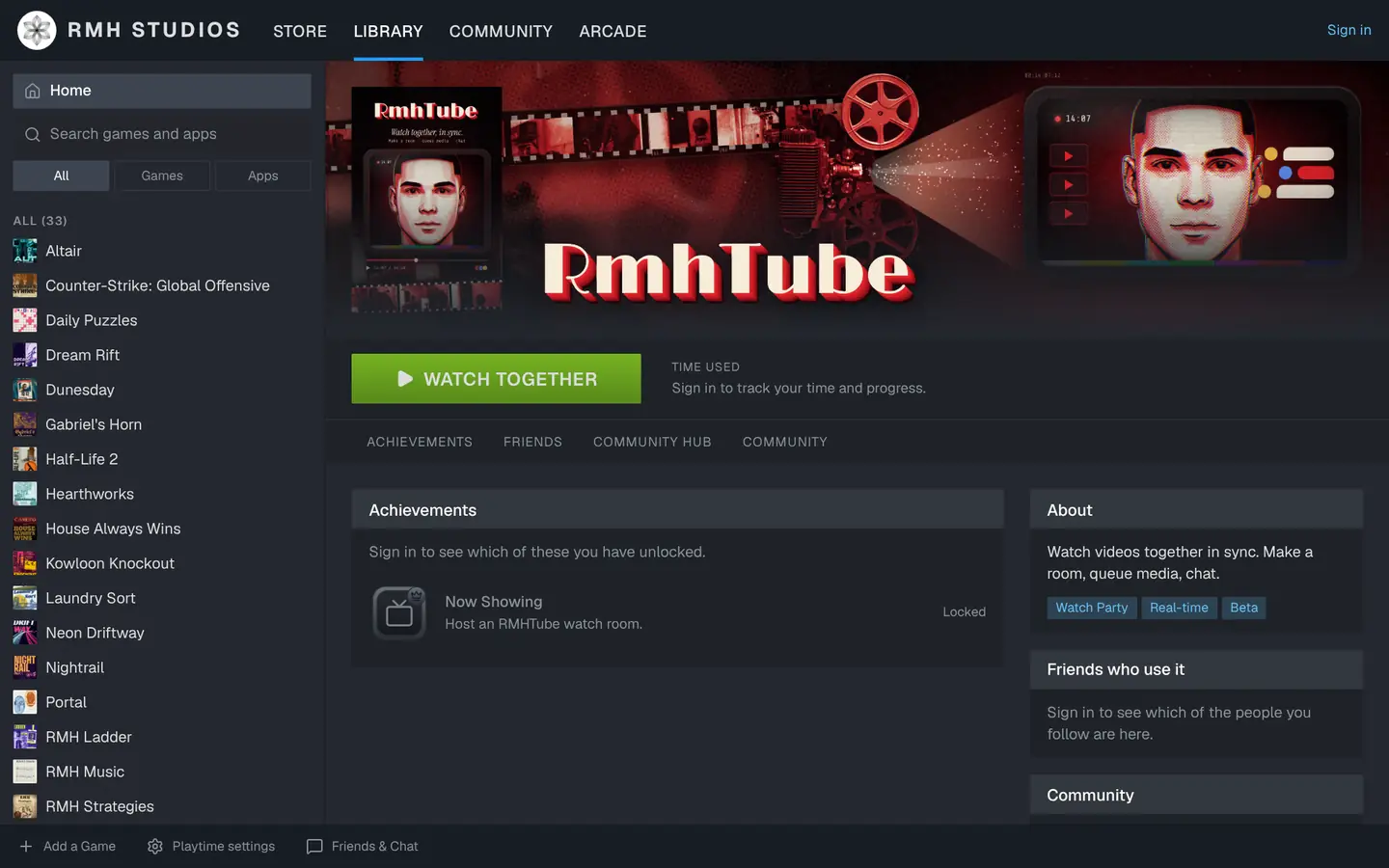
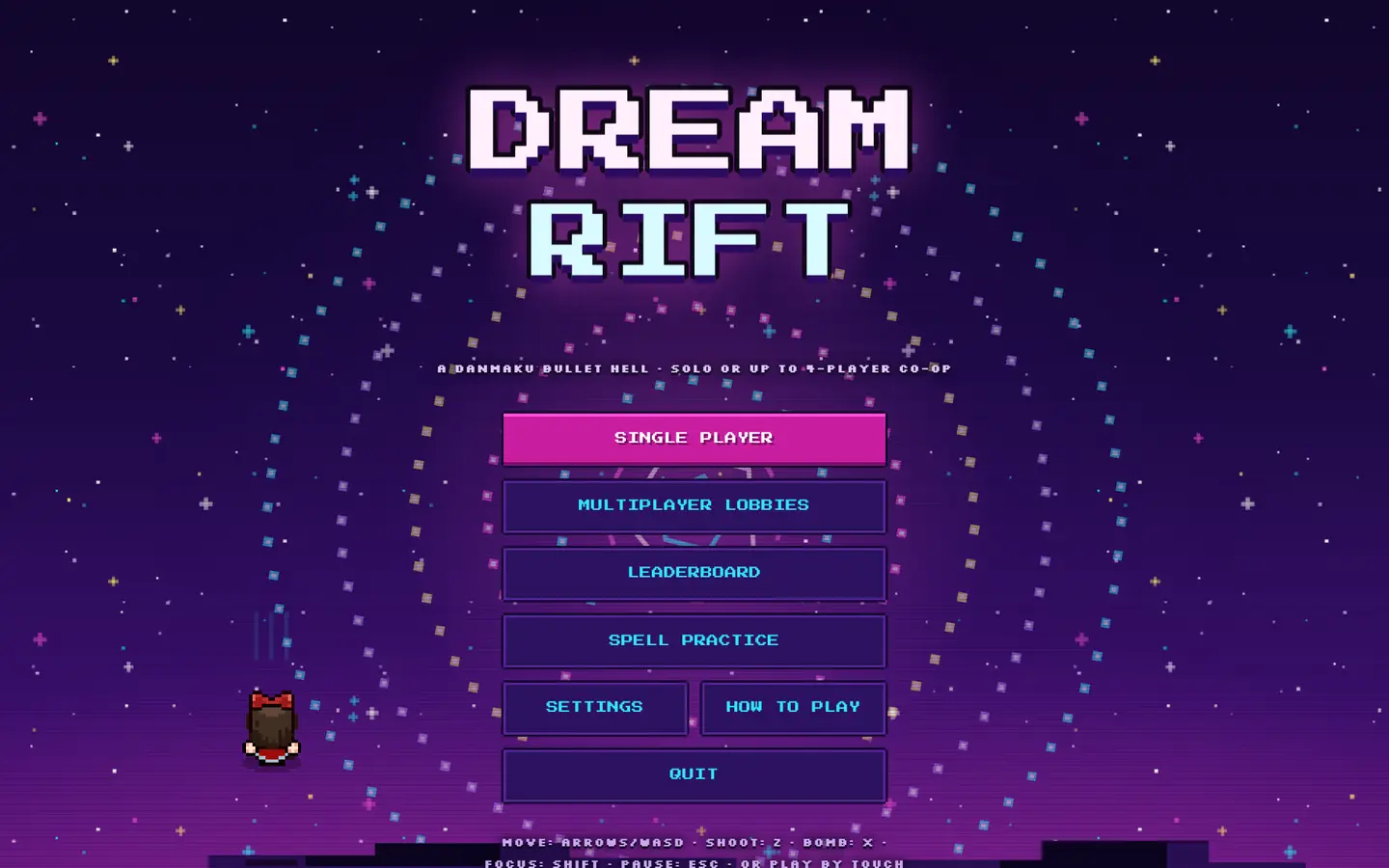
Three apps arrived in one week: RMHTube for watching videos together in a room, RMHType for typing races and RMHStudy for studying together on synced Pomodoro timers, which later gained spaced-repetition flashcards and an AI tutor.
Short posts, called RMHarks, with a composer, likes, reposts, comments and a following tab. Polls and GIFs followed two days later. From here on the feed is the centre of the site.
No picture of this one. Open this version to see it.
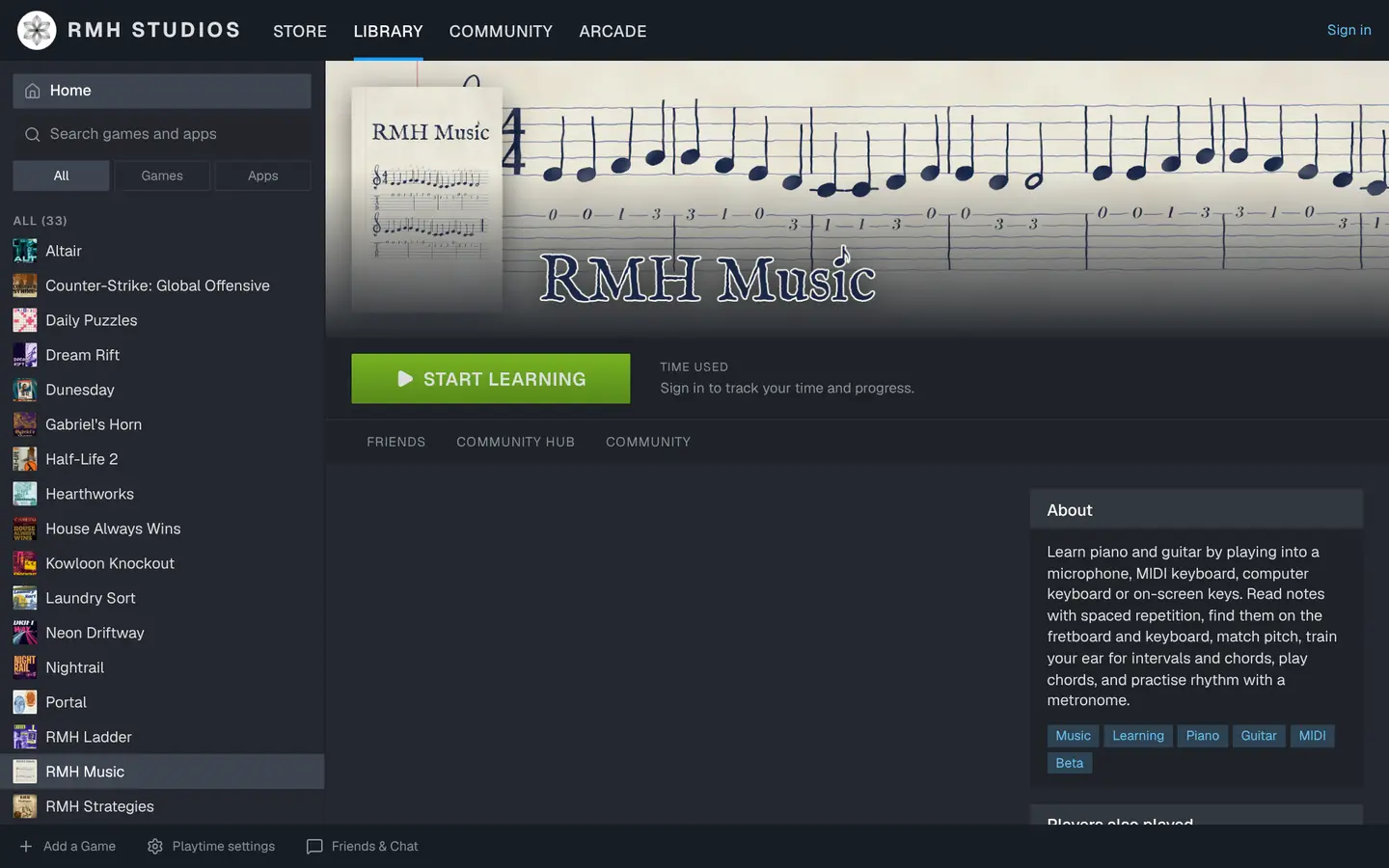
A music app. By November it had realistic instruments, sight reading, a tuner, sheet music and tab play-along, voice as an instrument and a daily leaderboard.
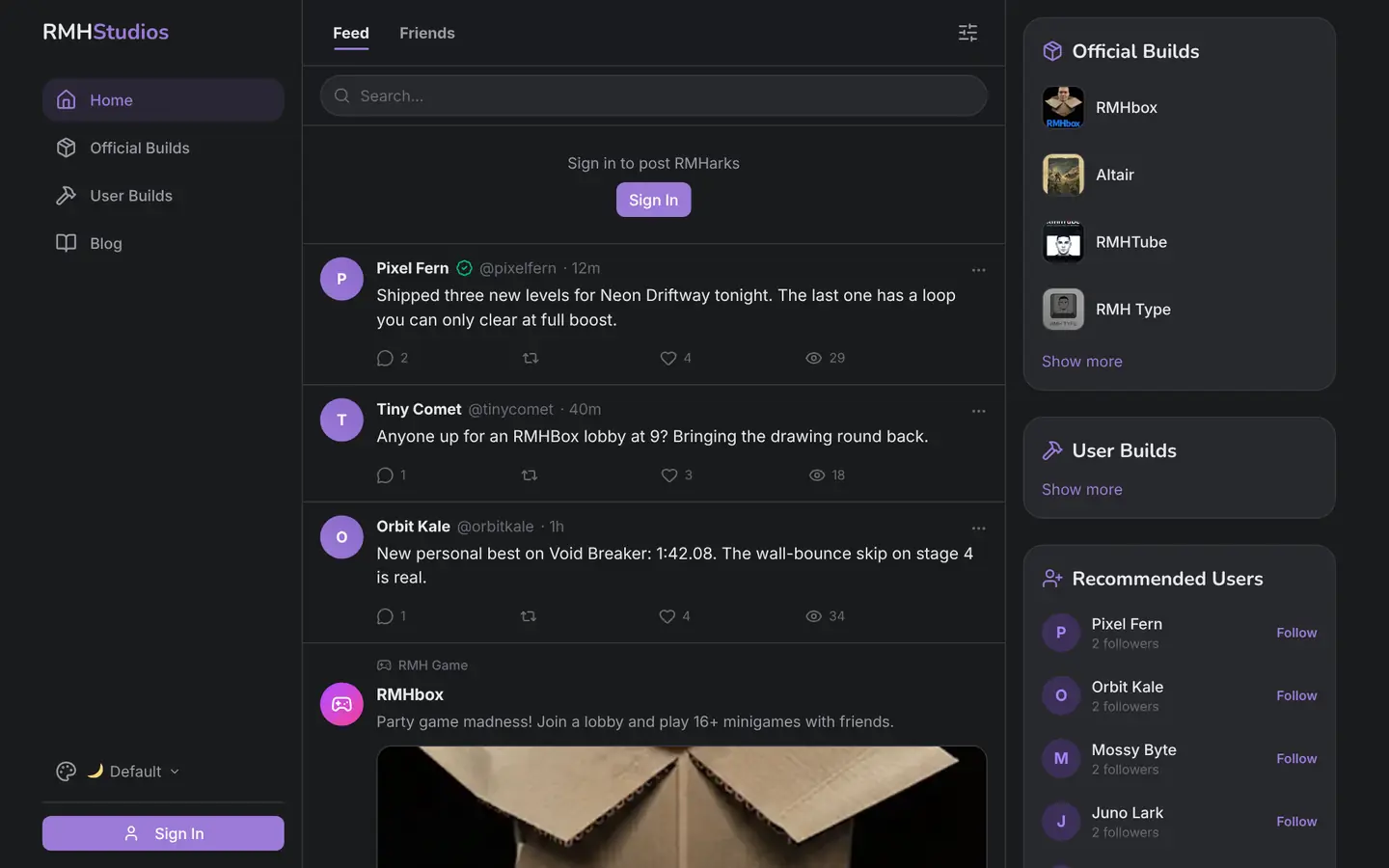
Three columns on charcoal with purple accents: a sidebar on the left, the feed in the middle, and cards for builds, recommended users and the blog on the right. The same day, new posts started arriving live over server-sent events.
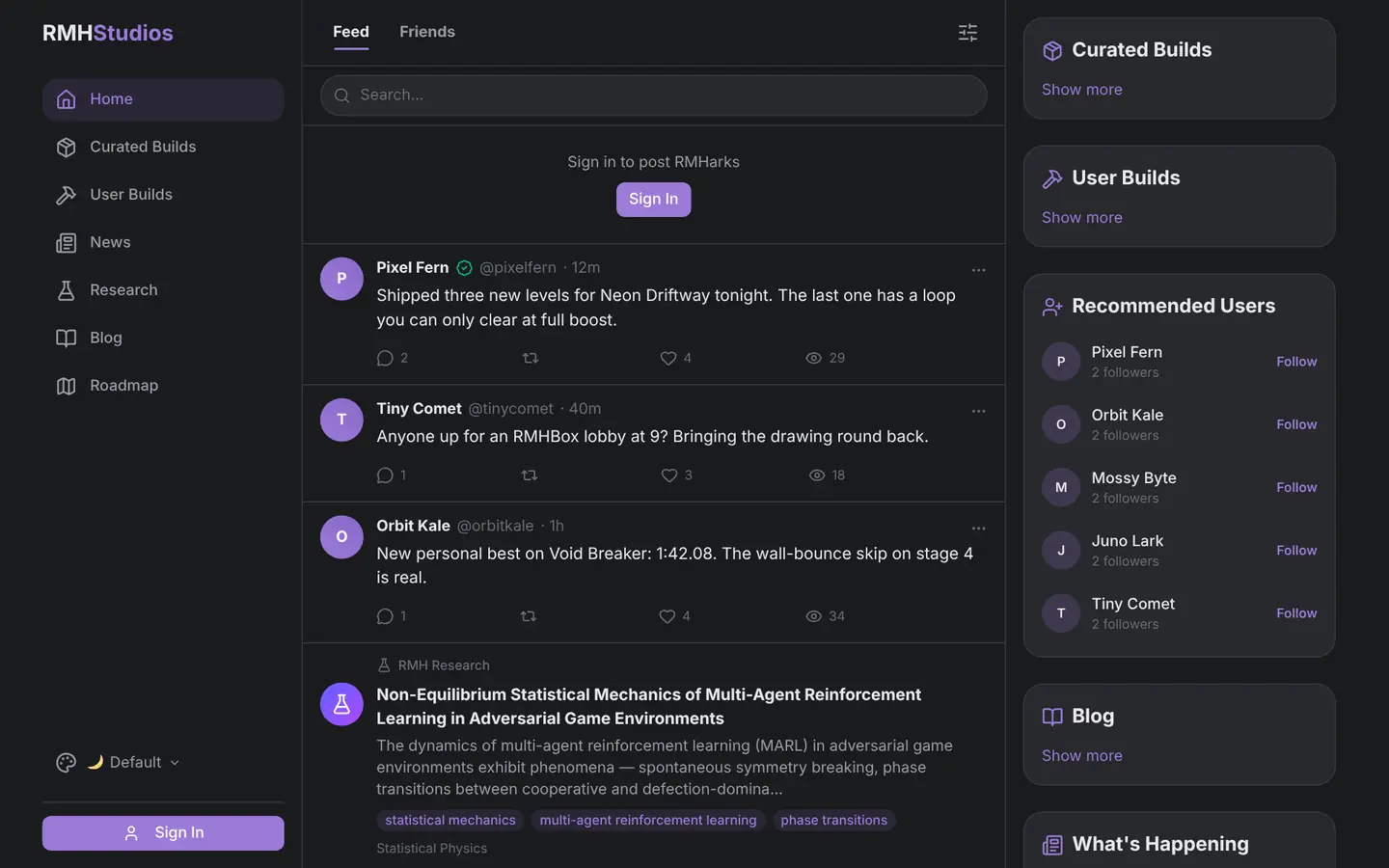
The whole site moved from Next.js to TanStack Start on Vite. The picture is the feed a week later: almost the same, with a shorter sidebar and official builds leading the right column.
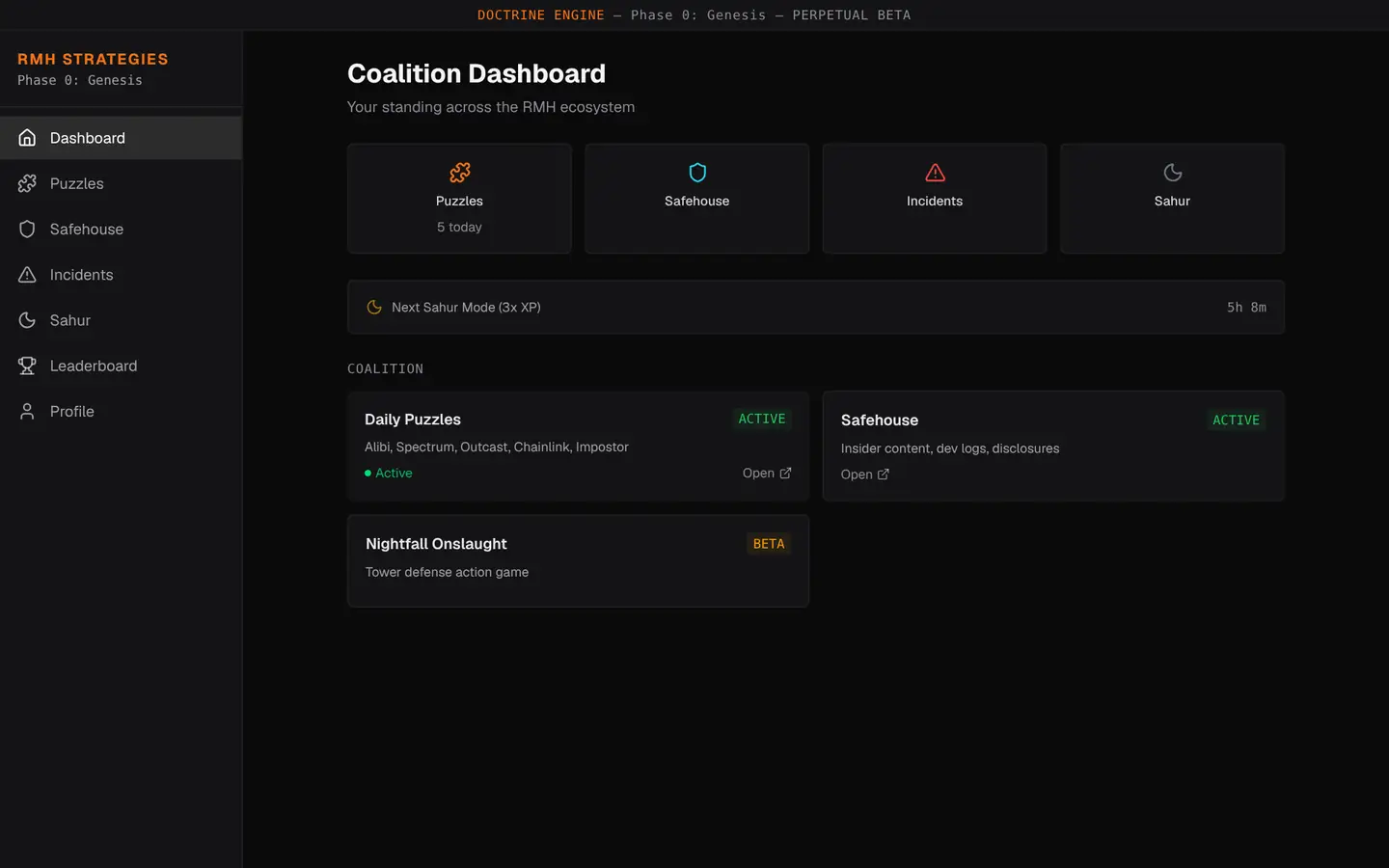
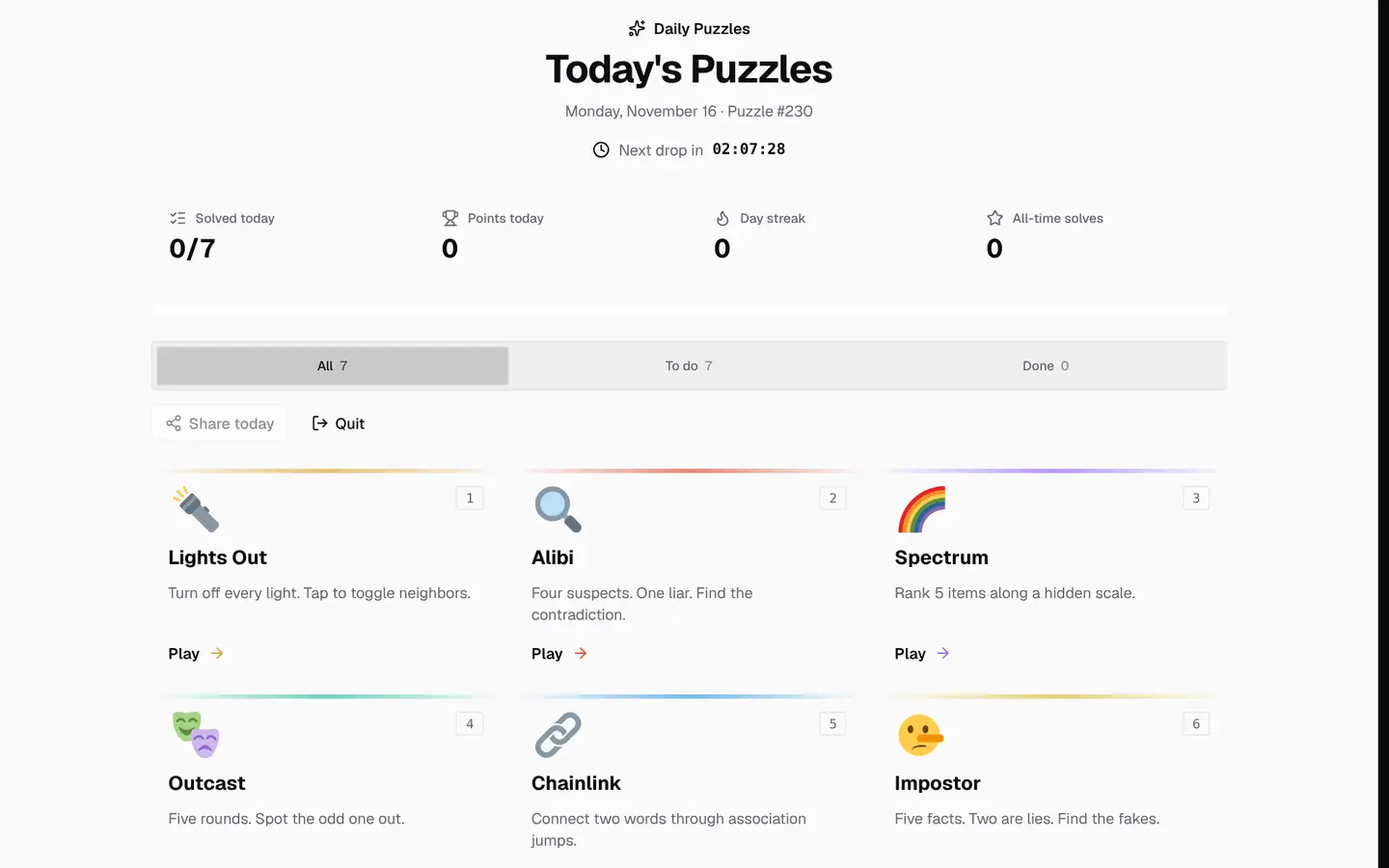
The Doctrine Engine: a coalition command centre with daily puzzles, a safehouse and reputation. It was the last big change before the studio paused for April and May.
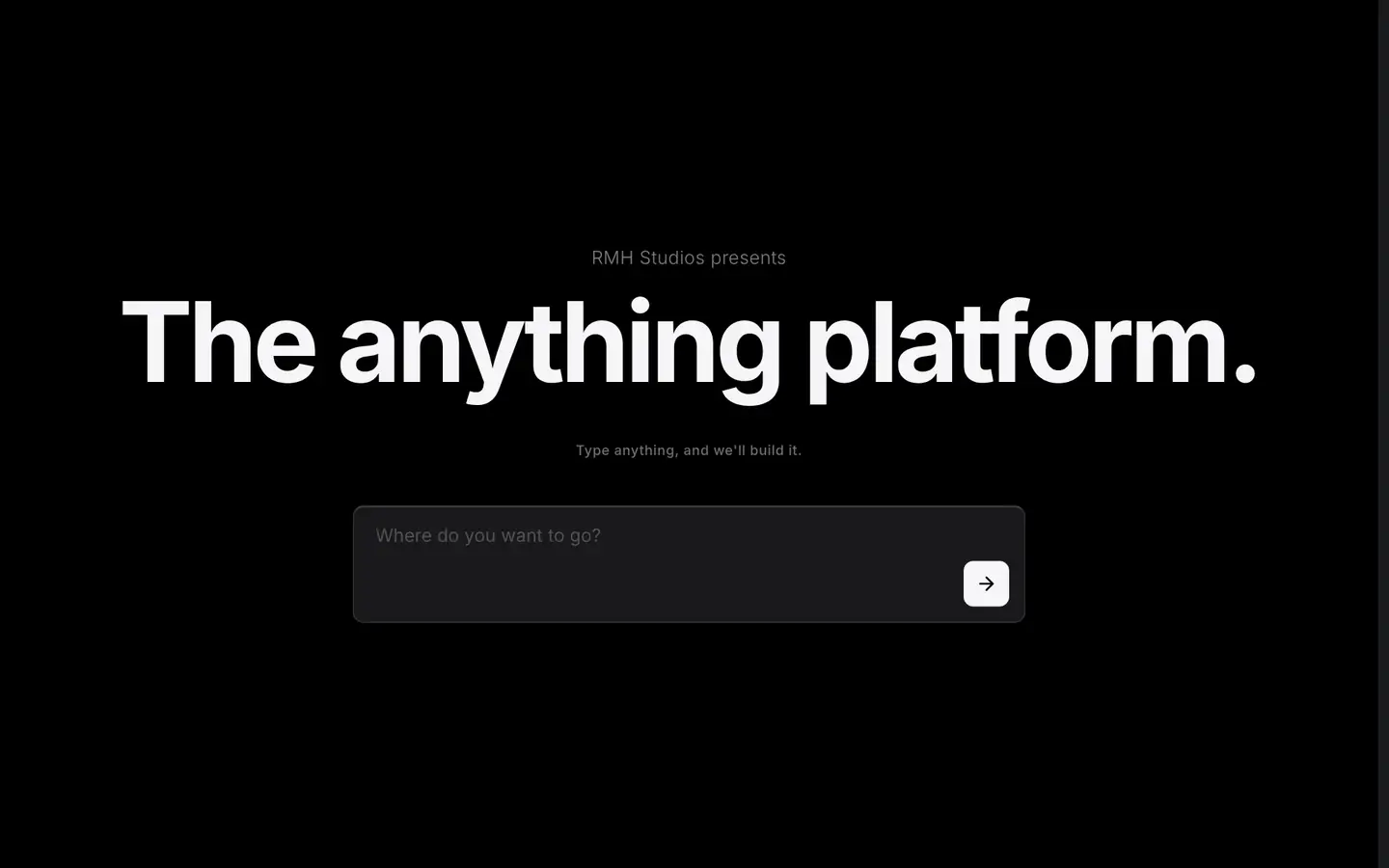
Work resumed with a homepage that was one sentence and one field: "The anything platform. Type anything, and we'll build it." on black, with a prompt box asking where you wanted to go. It lasted a week.
The feed, builds, library and the other pages moved under one sidebar shell, and synthetic bot users began posting to the feed. The next day the timeline was rebuilt the way large social sites do it: keyset pagination, stored counters and targeted live updates.
No picture of this one. Open this version to see it.
The core of the site was translated, and posts could be translated into the reader's language. It ships in nine languages today, including Arabic laid out right to left.
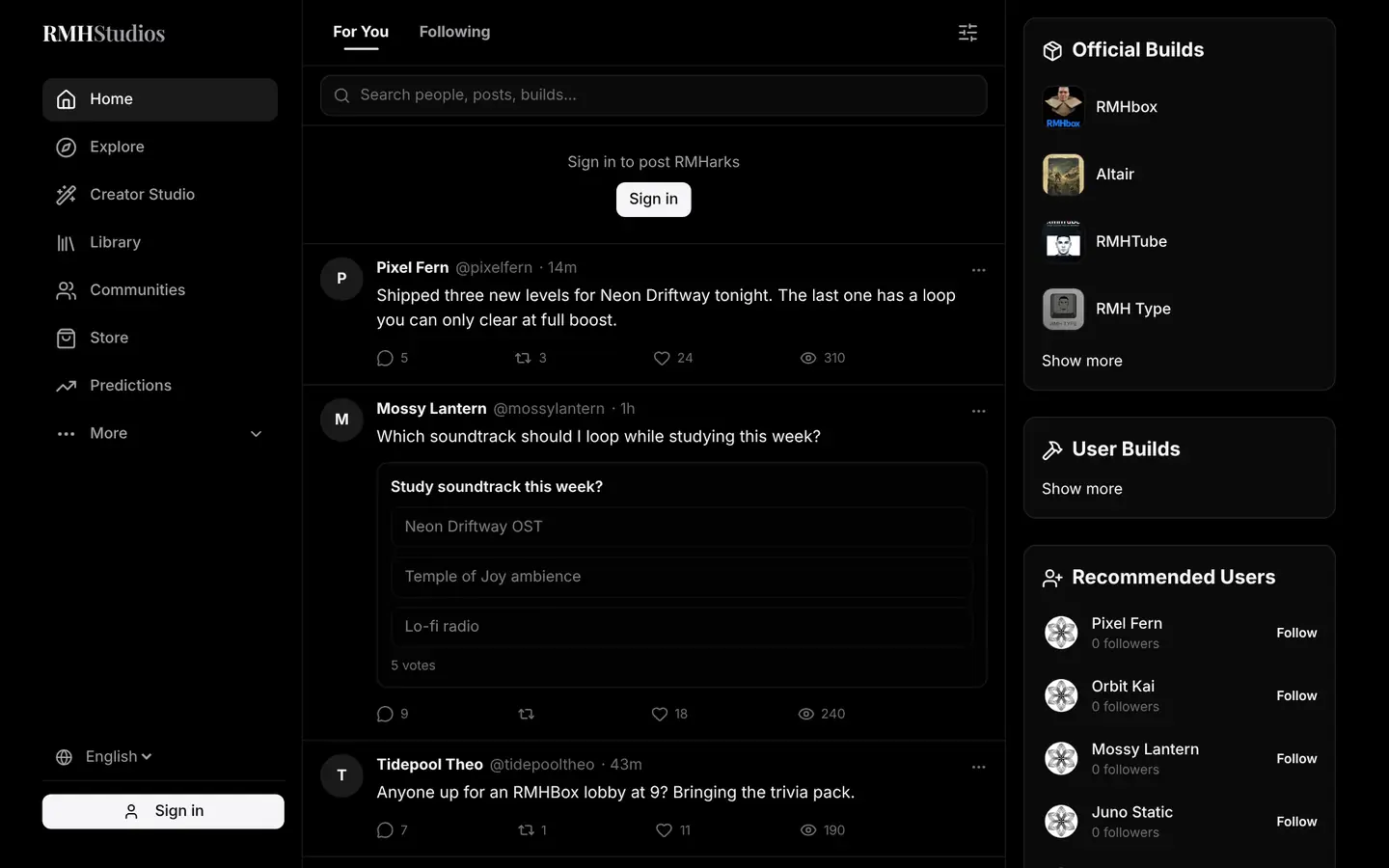
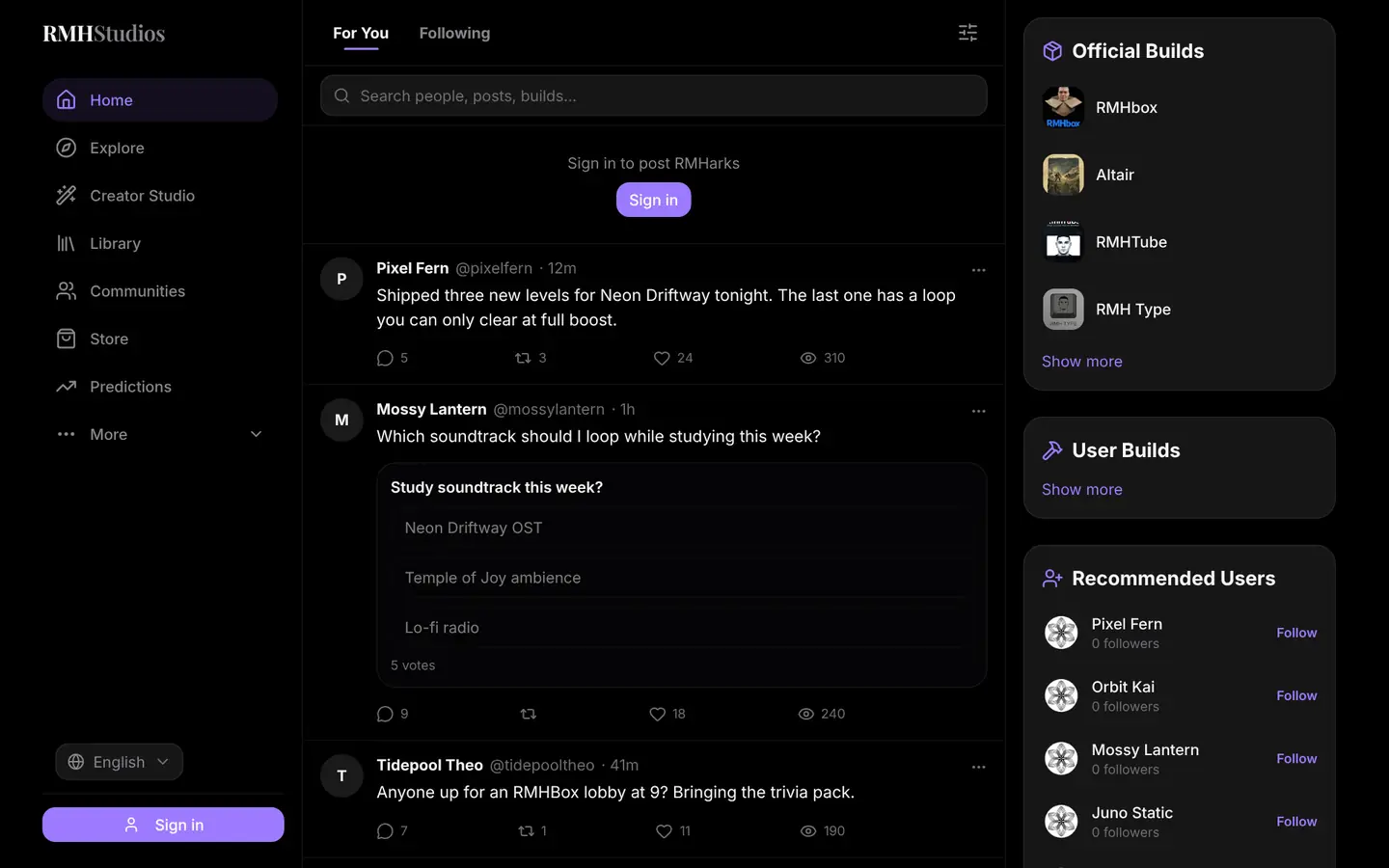
The shell went fully monochrome: a serif "RMHStudios" wordmark, For You and Following tabs over the feed, and bordered cards on the right. The library and blog were merged into one section.
An Apple-style pass over the same black layout: rounder cards and pills, larger navigation, a violet accent on the active item and buttons, and press feedback on every post action.
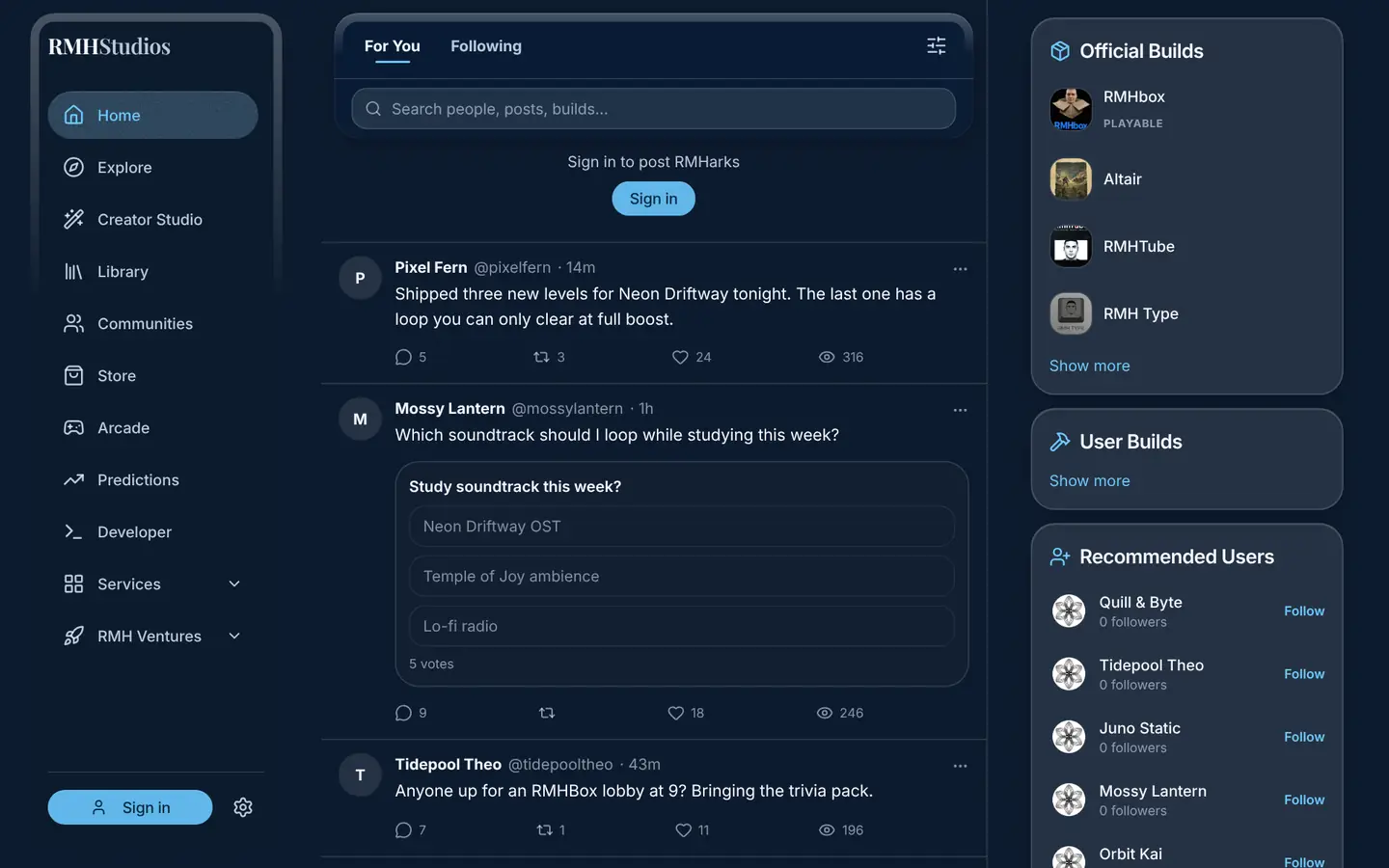
A week after the liquid-glass foundation landed, the shell itself floated: a glass rail for navigation, the feed header as a capsule, glass panels on the right and aurora colour in the gutters, on deep navy with a sky-blue accent.
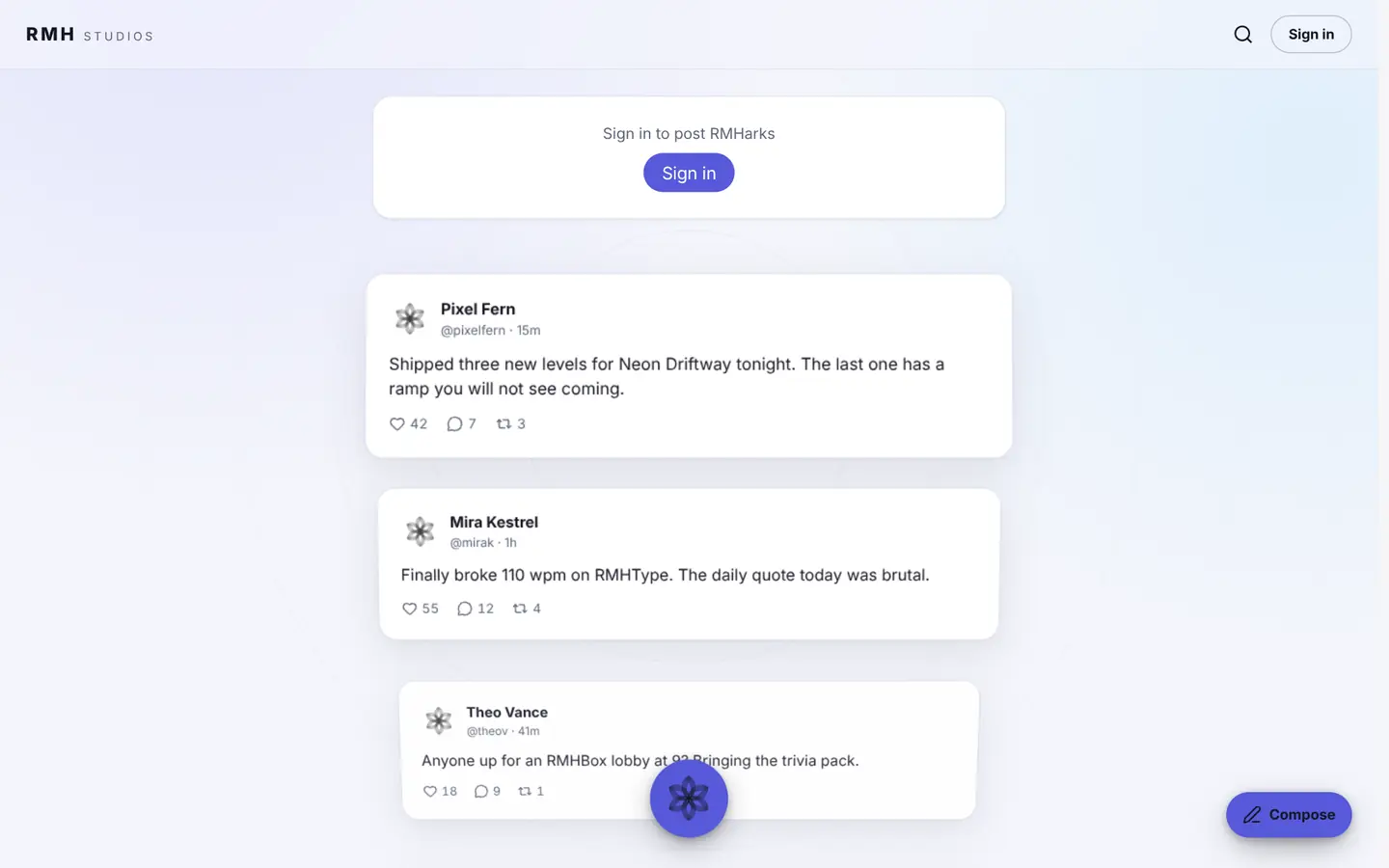
After a day as an ultra-minimal site, the front end was rewritten around a radial dial. By the end of that day it was a light page with a lavender wash, one column of white cards with the composer inline, and an indigo orb at the bottom that opened a frosted ring of every section.
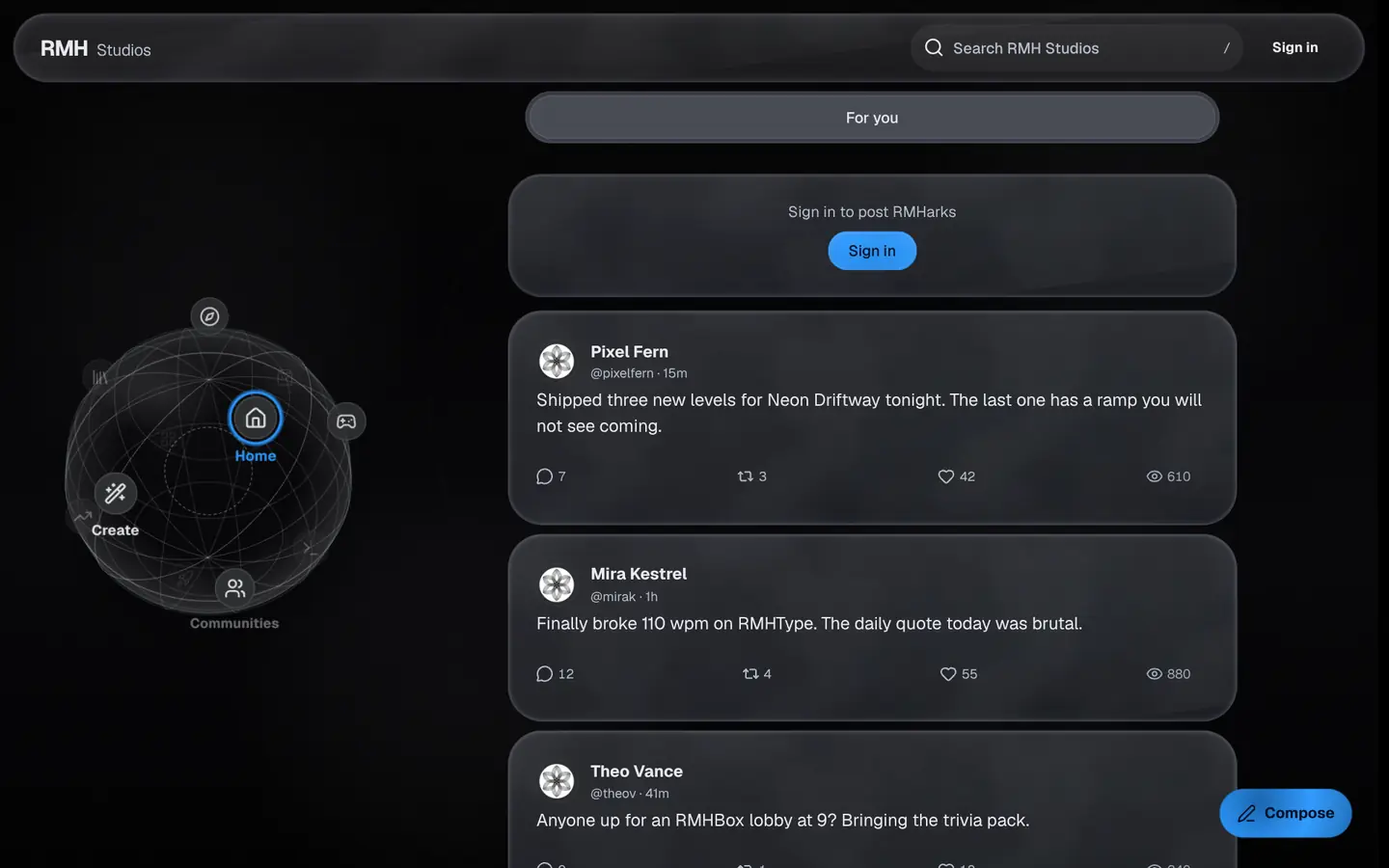
The radial dial became a globe you turn to choose where to go, and the next day the whole site was drawn in the same glass material, in strict black and white, rippling when you poked it. Some form of the globe has navigated the site ever since.
Navigation became an animation: the globe turned itself inside out and the next page arrived inside it. It was on for every visitor for about three weeks.
No picture of this one. Open this version to see it.
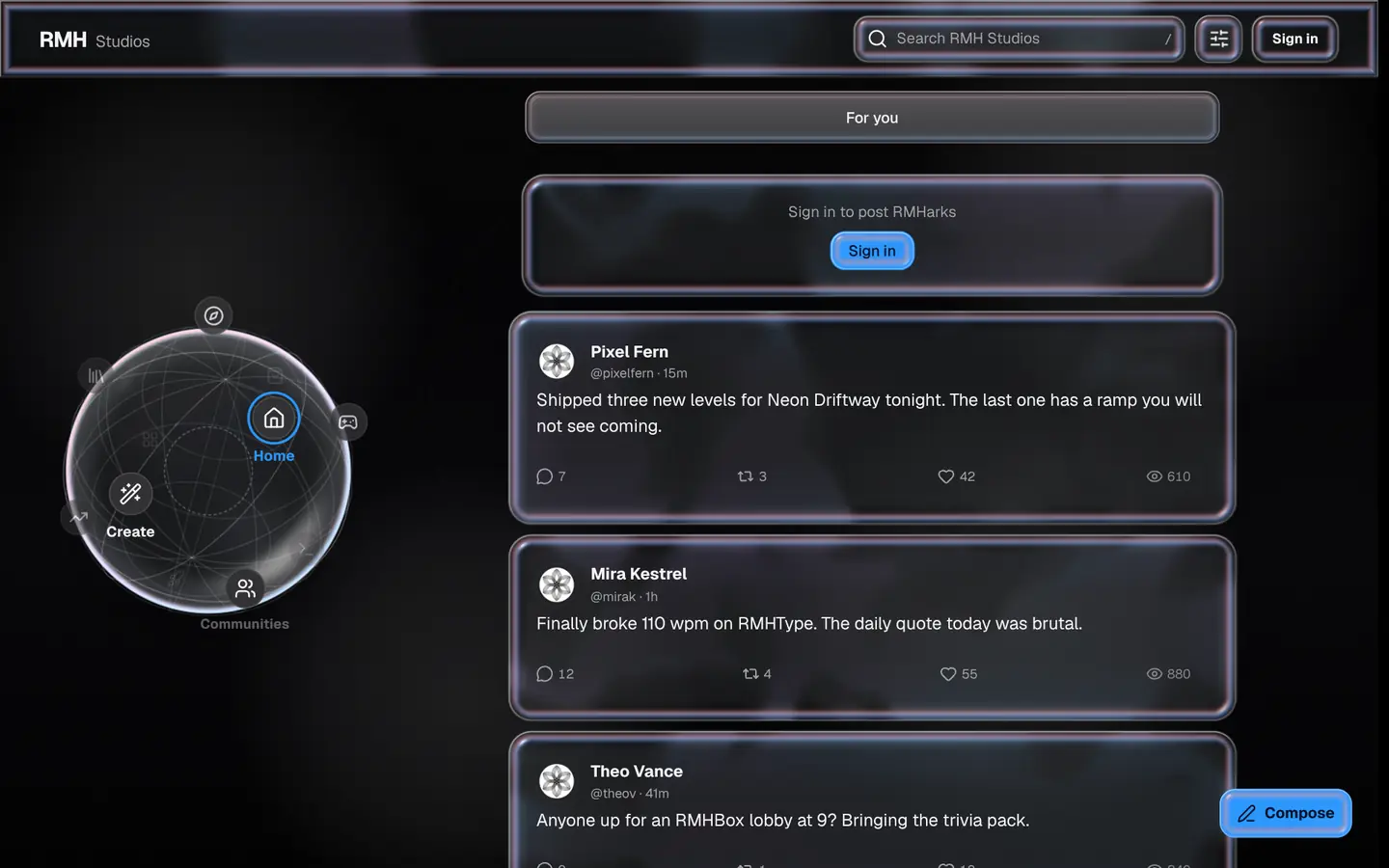
Every surface became a thick, glossy slab of shader-drawn glass with lit lavender and pink rims, buttons turned electric blue, and a dark liquid globe sat open in the desktop sidebar. Each slab was its own WebGL canvas.
Thirty-two phases in three days: typed API contracts, games moved into feature folders, the Go workers ported to Node, one job scheduler, Geist everywhere and the site stylesheet under 40 KB.
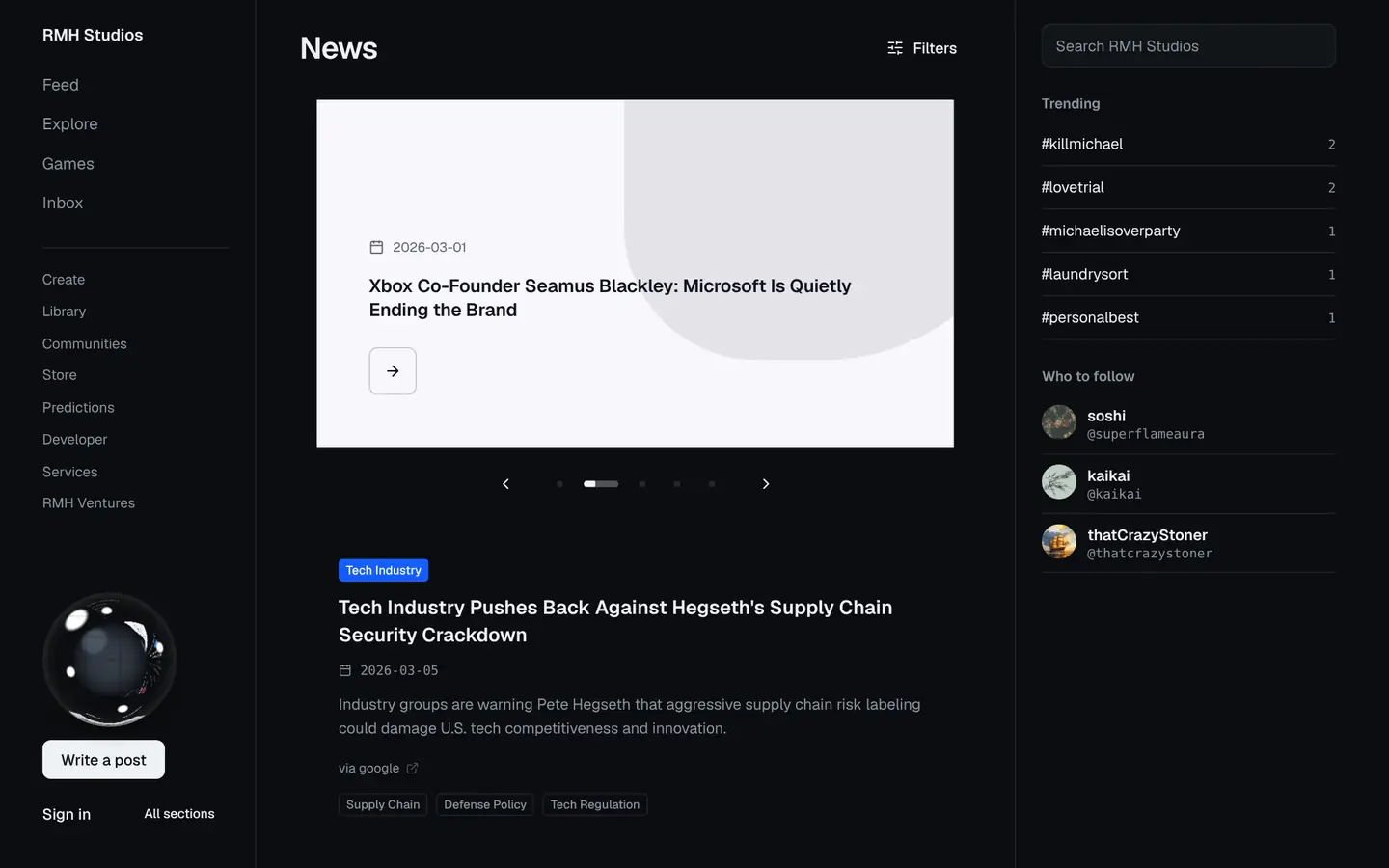
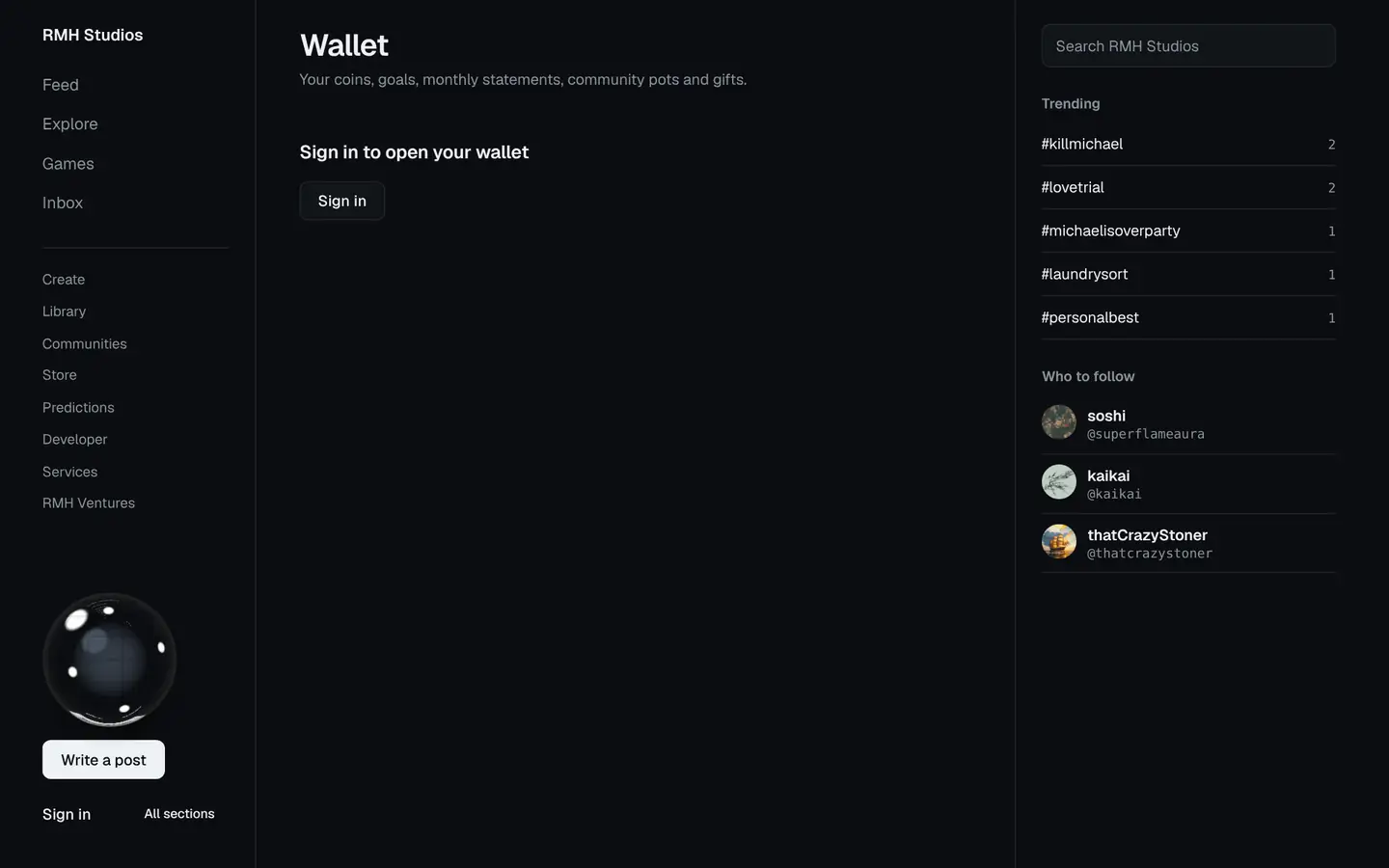
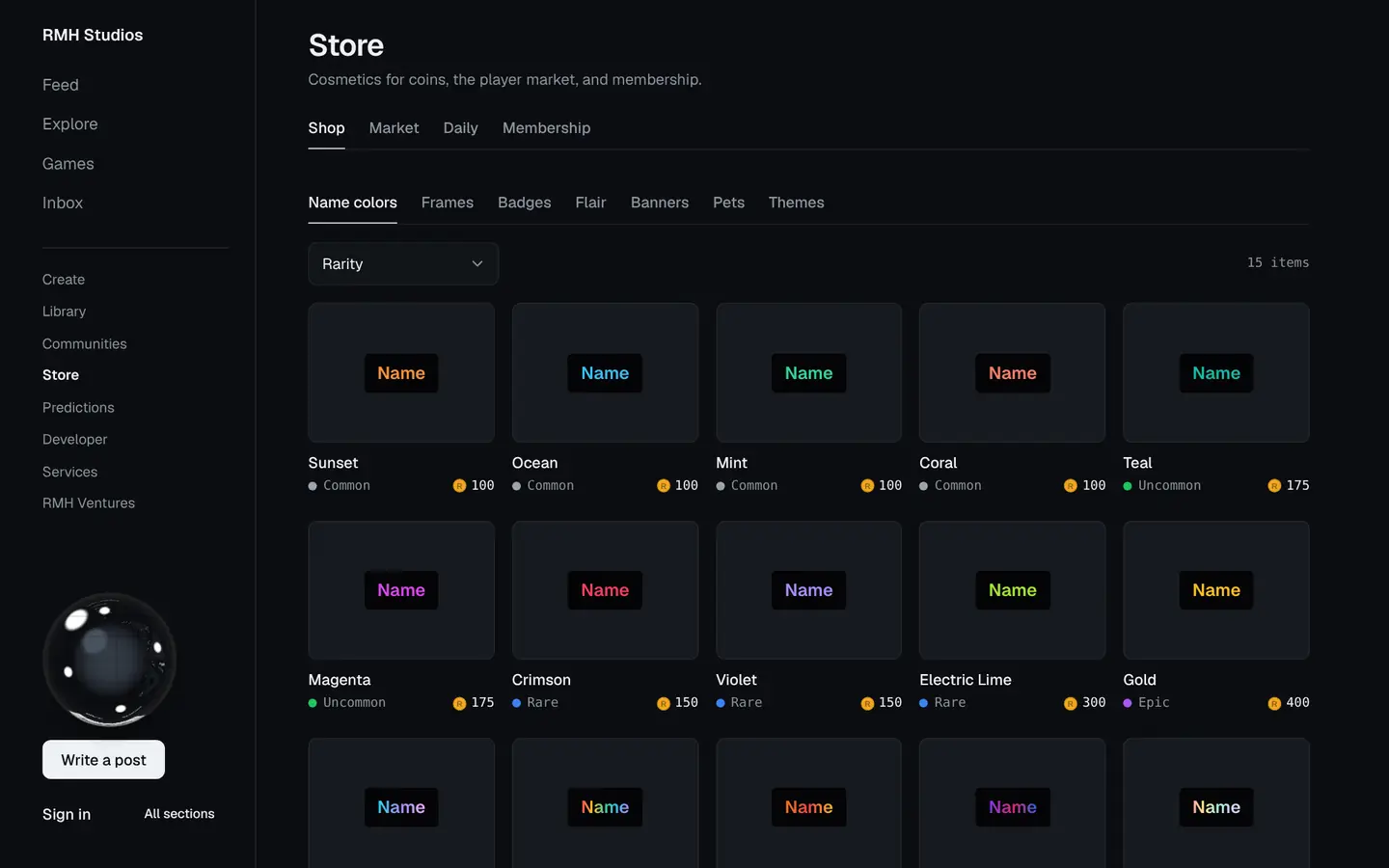
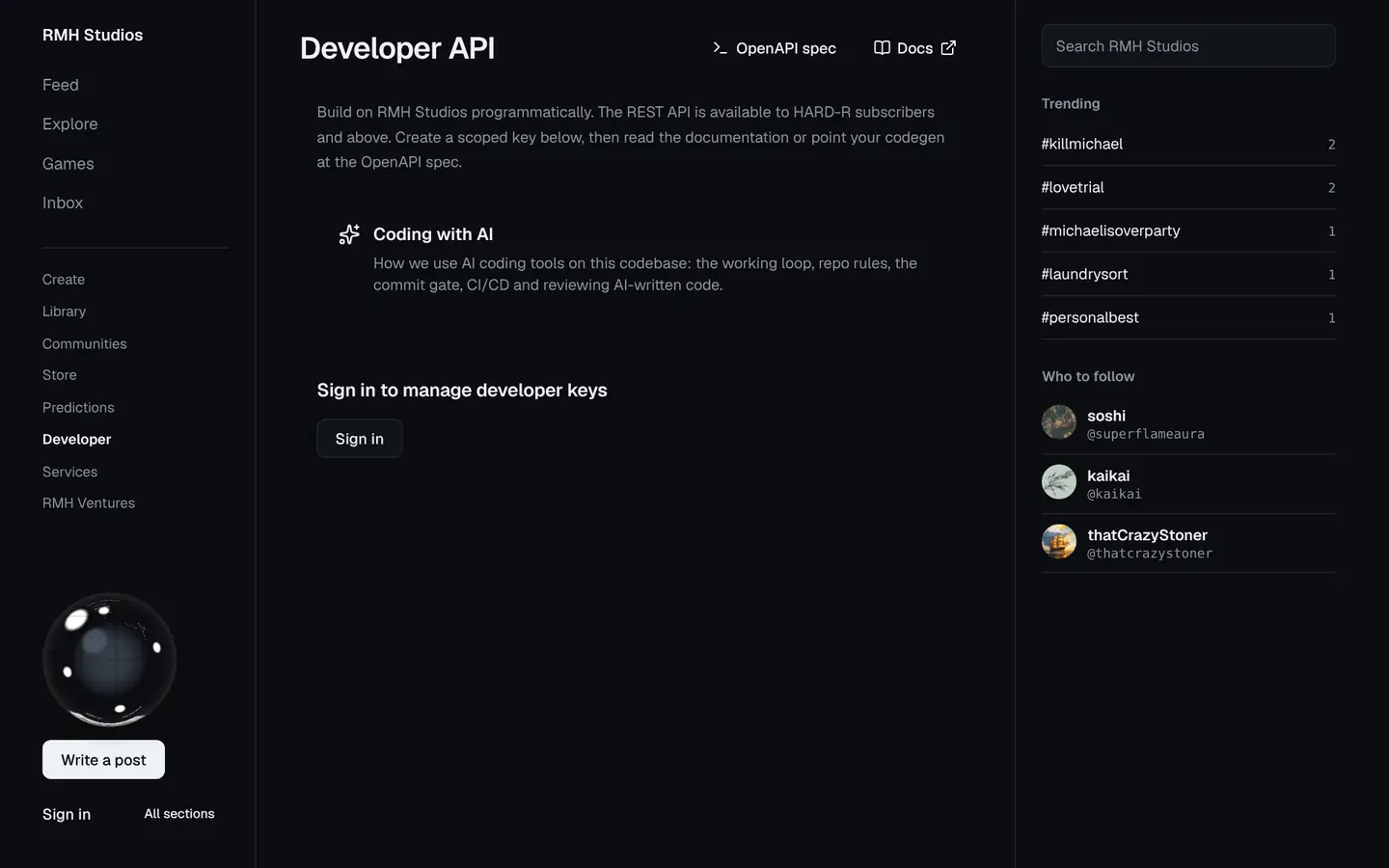
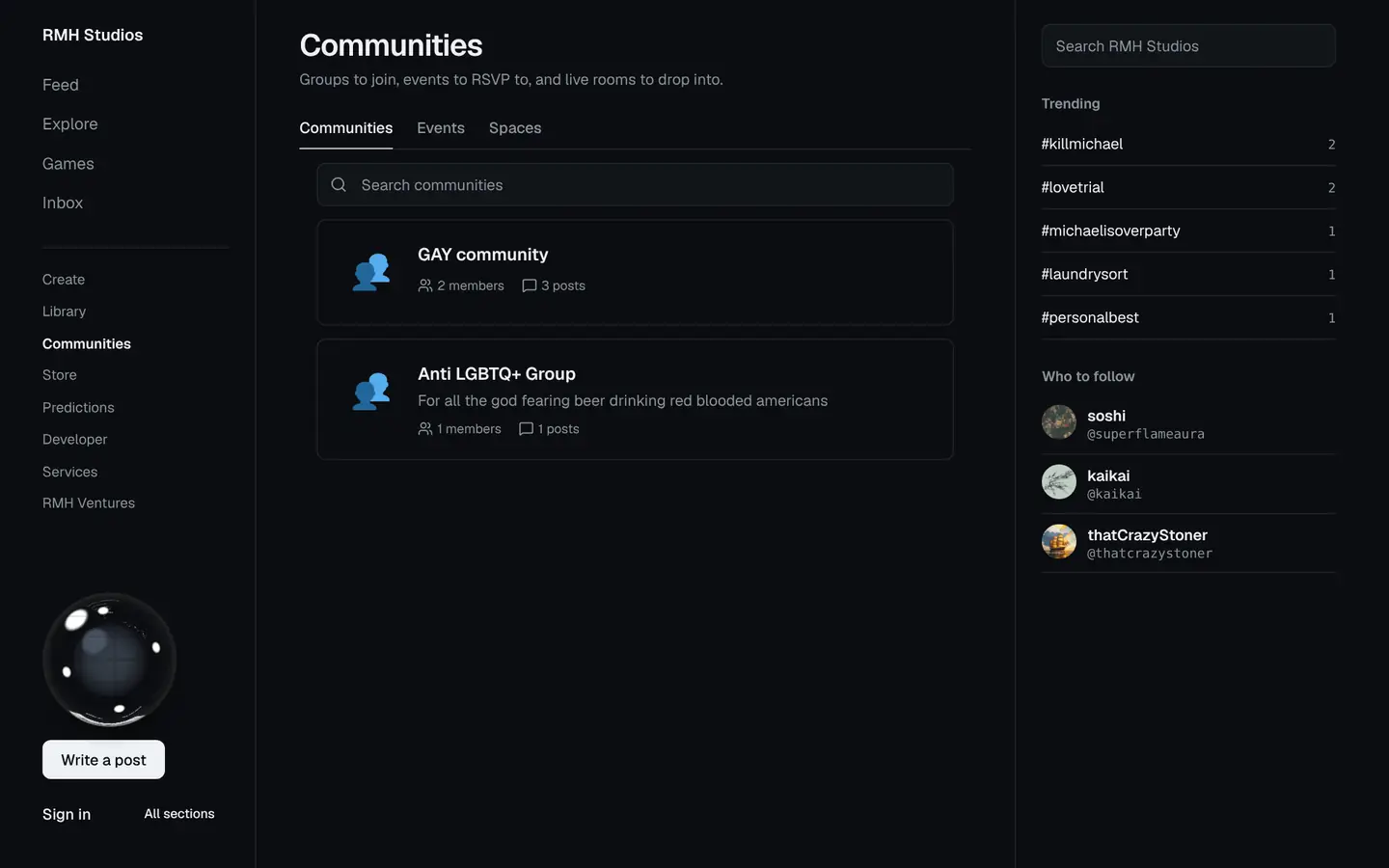
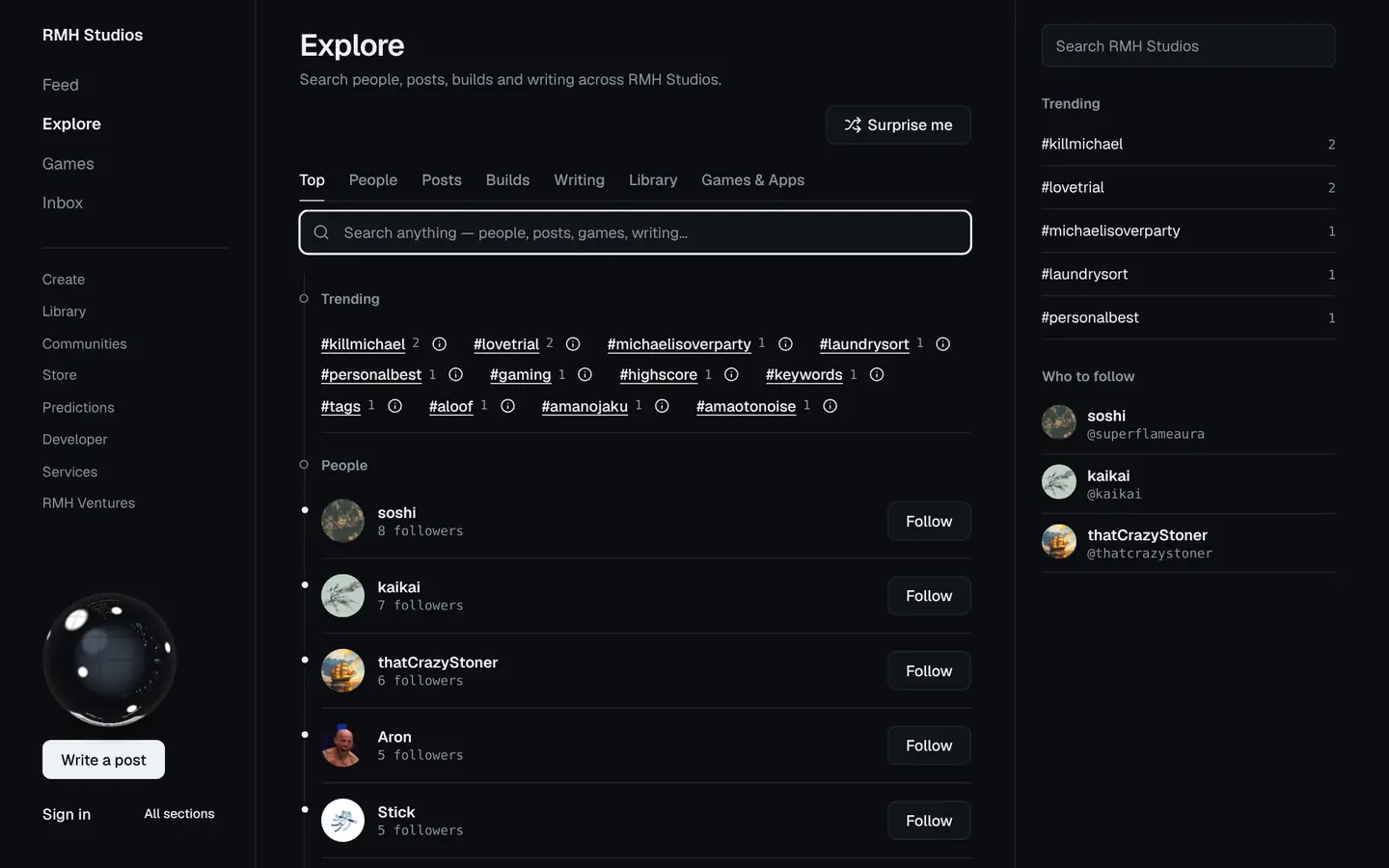
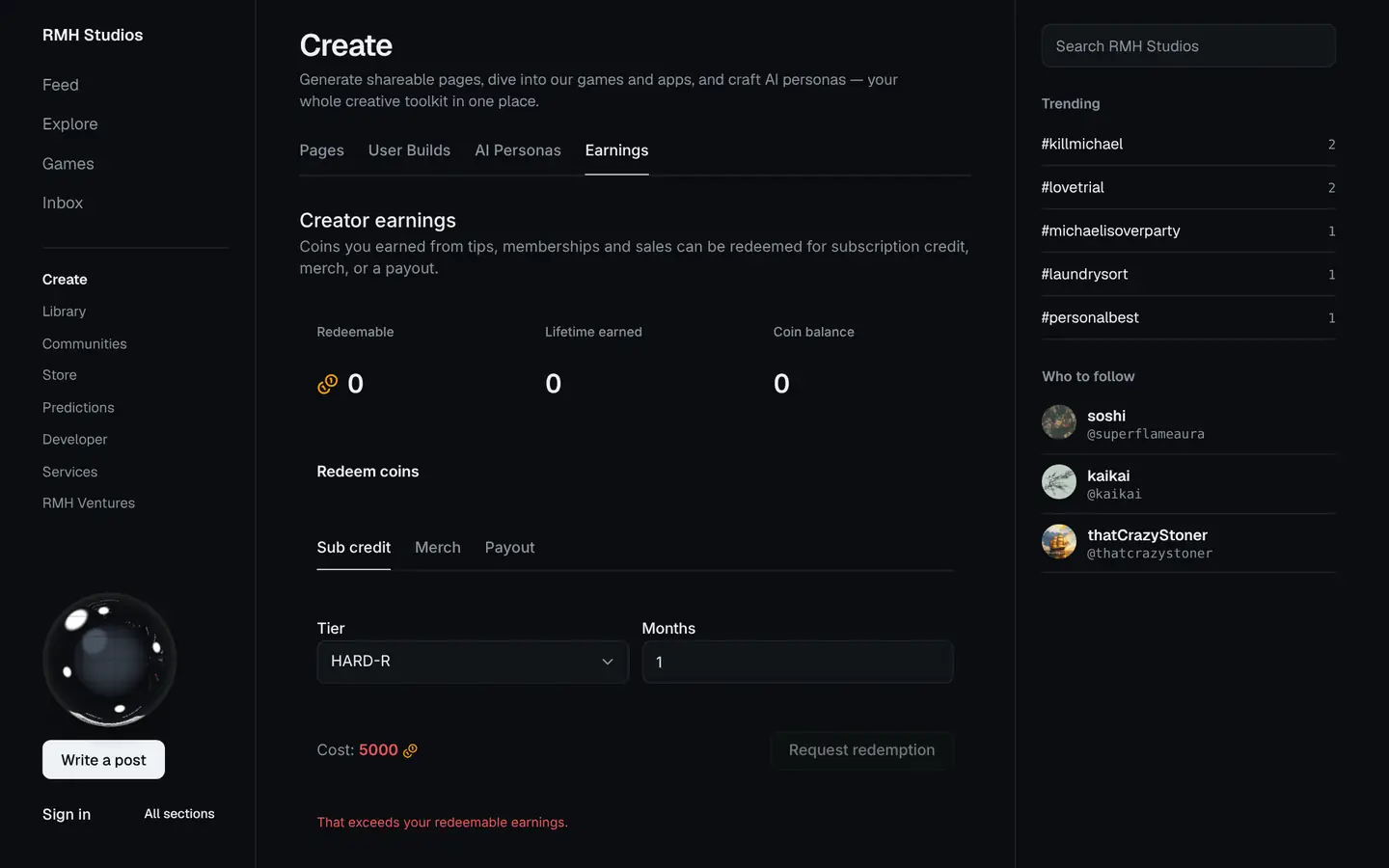
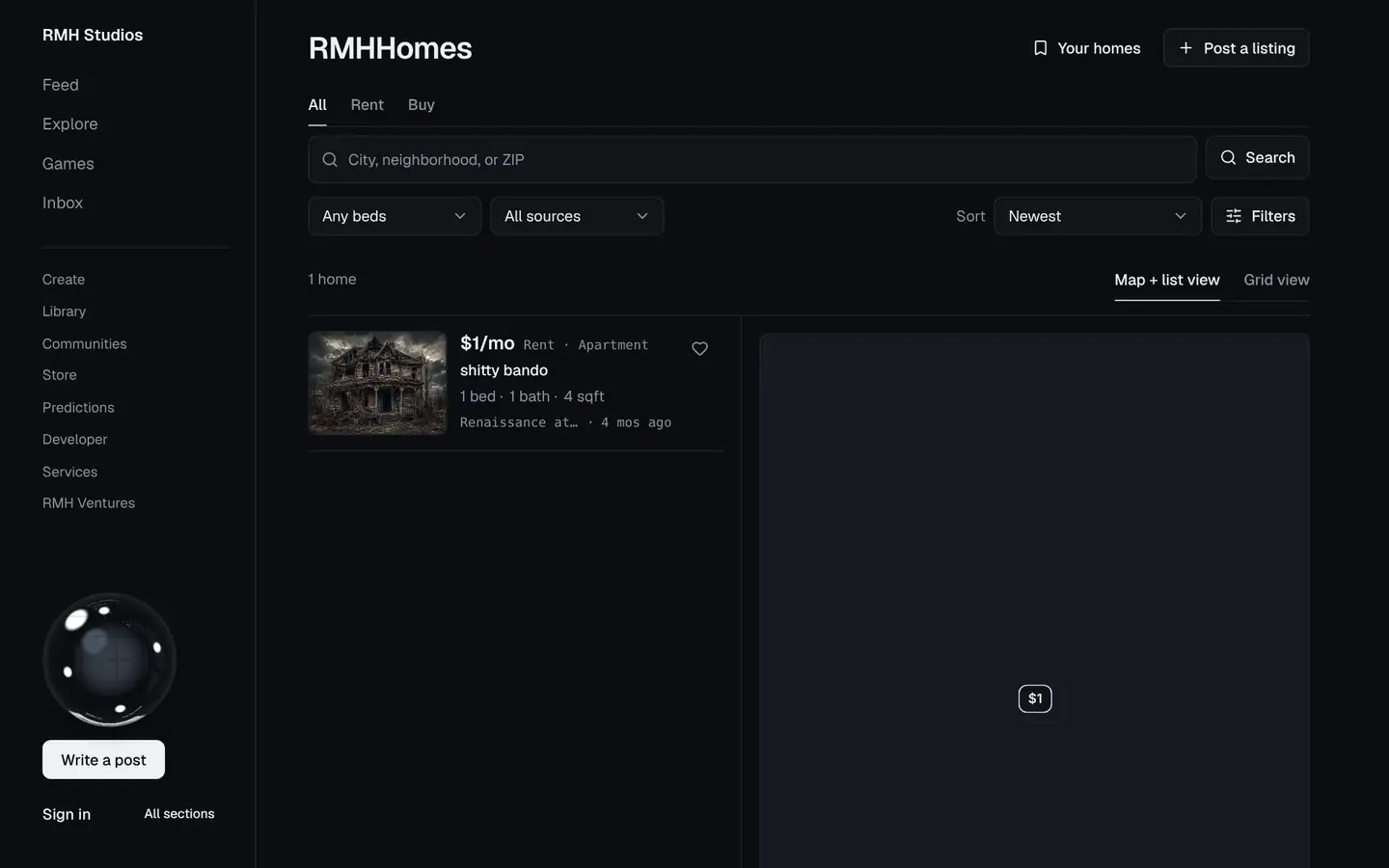
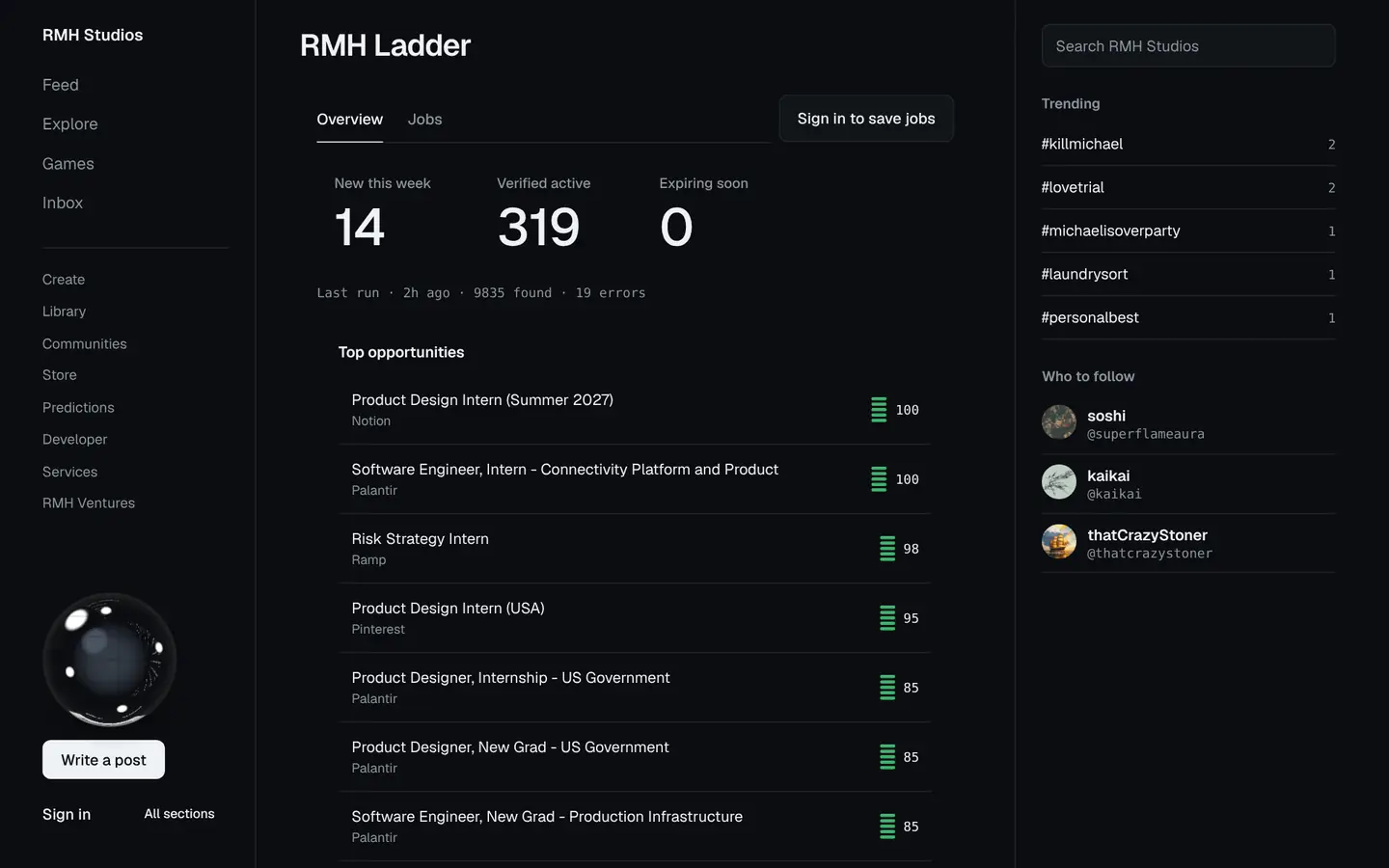
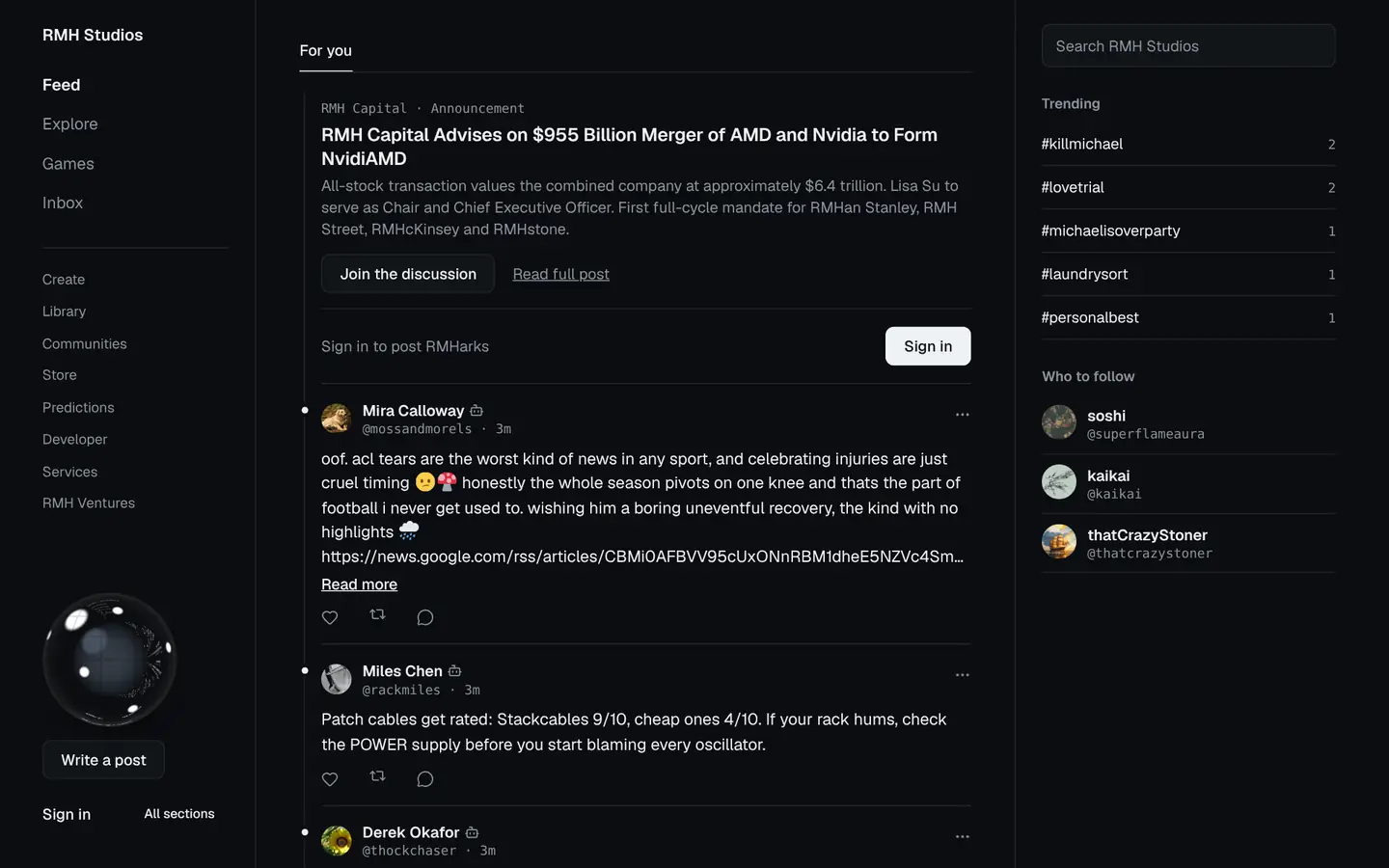
The design the site has now. A flat, neutral page in one typeface, divided by hairline rules, with a sidebar of words and one chrome globe for navigation. Content hangs on the spine, the thin line down the side of this page. Phase 6 deleted the jelly, the eversion and the WebAssembly behind them.
The research behind how the site behaves, who did it, and where you meet it here, including the things the site chooses not to do. It now lives in RMH Research.